Hubbub has gone into hibernation.

Things we’re working on (volume 3)

Four months have passed since the pre­vi­ous update on our projects so it’s about time for a new one.

Curating a playful exhibition

The love­ly folk at Storm have asked me to return as cura­tor of the play­ful-slash-inter­ac­tive exhi­bi­tion that will be part of youth the­atre fes­ti­val Twee­t­akt 2012. I did the one this year, had fun, learned a lot too and we got some nice respons­es so I’m keen to have at it again. It’s ear­ly stages so I am most­ly mak­ing lists of inter­est­ing work that has caught my eye over the past year. The next step will be to fil­ter it and try to come up with a cohe­sive selec­tion. Some pat­terns I’ve spot­ted thus far are ten­ta­tive­ly titled Robots and Mak­ing. We’ll see how those devel­op.

Publishing on Code 4

You may have noticed a new project write­up in the port­fo­lio about Code 4 (pre­vi­ous­ly referred to as Maguro). We’ve talked about it at Chi Sparks and Think Design Play and are now in the process of pro­duc­ing a short video that’ll hope­ful­ly give you a bet­ter feel for the play­er expe­ri­ence. One of the chal­lenges of work­ing with per­va­sive games is that a lot of the action hap­pens off the screen and so there are few arti­facts that we can use to show the game. The game is in fact a per­for­mance that needs to be reg­is­tered, so that is what we’re doing now. I’m work­ing with the great Hein Lager­weij on this one who I first col­lab­o­rat­ed with for the Buta videosketch. Speak­ing of which…

Publishing on Buta

We screened a sneak pre­view of the Buta videosketch at Think Design Play and I think it’s safe to say we raised a few eye­brows. It was inter­est­ing pre­sent­ing work at an aca­d­e­m­ic con­fer­ence where most of what was pre­sent­ed were arti­cles. I got the sense some atten­dees weren’t as accus­tomed to respond­ing to stuff as they are to dis­cussing ideas. On the upside, I noticed lots of com­ments and ques­tions that were exact­ly the kinds of con­sid­er­a­tions we want to stir with this video. I am going to ask for a bit more patience on your side and promise you’ll get to watch the video your­self soon.

Art van Triest and Hein Lagerweij at the Vechtclub

Art van Tri­est and Hein Lager­weij at the Vecht­club

Making a game that teaches astronomy

Final­ly, there’s Iru­ka, which is the main project hap­pen­ing in the stu­dio at the moment. It’s me and Karel Mil­lenaar (game design heavy­weight) work­ing with Noord­hoff Pub­lish­ers (pro­duc­ers of teach­ing mate­ri­als for all lev­els of edu­ca­tion) and the Amstelveen Col­lege (a sec­ondary school) to explore the oppor­tu­ni­ties games and play pro­vide in the class­room. Specif­i­cal­ly, we’re look­ing at nov­el teach­ing meth­ods for the ‘gen­er­al nat­ur­al sci­ences’ course which is manda­to­ry for all fourth-year stu­dents in VWO. This course cov­ers a lot of sub­jects, but we’re build­ing a pilot around astron­o­my. That’s right, we’re explor­ing space! We’ve come to the point where a con­cept has been approved and we can start to work out the details and build a pro­to­type. Playtest­ing will hap­pen in the class­room through­out the rest of this year and hope­ful­ly, come jan­u­ary, we’ll have some­thing to share with you.

Any­way, that’s it from me for now. As always, if any of this peaks your inter­est, don’t be shy and drop a note below.

Posted in Projects | Tagged , , , , , , , , , , , , | Comments closed

The Transformers at dConstruct 2011

Over two weeks have passed since dCon­struct 2011 so it’s high time I post my talk.

I felt a bit appre­hen­sive about this one: dCon­struct tends to have a pret­ty het­ero­ge­neous audi­ence, so it’s hard to know what kind of talk to shoot for. In addi­tion, I was slight­ly wor­ried about how peo­ple would react to my com­ments on the UK riots, being an “out­sider” myself.

How­ev­er, I get the sense peo­ple appre­ci­at­ed my attempt to con­nect design (game design in par­tic­u­lar) to cur­rent issues, which is grat­i­fy­ing. I guess I should’ve just trust­ed Andy Budd’s judge­ment when he okayed my abstract. Him and the rest of the folks at Clear­left did an out­stand­ing job putting this on and I am glad to have been part of it.

So below are some of my slides and notes. This isn’t a ver­ba­tim account of what I said that day, but rather a kind of hyper­text remix. It’s become a bit of a long read, but I do hope it’s worth it. Enjoy, and do get in touch if you have any com­ments, ques­tions and so on.

Update, Octo­ber 6, 2011: a video of this talk is now up on vzaar.

Read More »

Posted in Talks | Tagged , , , , , , , | Comments closed

Catch us at NPOX, PICNIC or Playgrounds

I’ll be involved with a few more inter­est­ing events, so here’s a quick run­down.

  • I’ll be par­tic­i­pat­ing in a pan­el on gam­i­fi­ca­tion at NPOX, the annu­al con­fer­ence for cre­atives of the Dutch pub­lic broad­cast­ing ser­vices. I’ll talk about PLAY Pilots, and offer my per­spec­tive on a case sub­mit­ted by the audi­ence.
  • At PICNIC, I’ll con­tribute to a ses­sion that reflects on — amongst oth­er things — the work done by par­tic­i­pants of the VURB work­shop Builders at Play.
  • And final­ly, at Play­grounds, we’ll run a pop-up edi­tion of This hap­pened, as well as some oth­er stuff that we’ll announce as soon as we’ve fin­ished prepa­ra­tions.

Per­haps I’ll catch you at one of these?

Posted in Upcoming | Comments closed

Speaking about Code 4 at Think Design Play, the DiGRA conference

This year the DiGRA con­fer­ence will take place 14–17 sep­tem­ber in Hil­ver­sum, the Nether­lands. My alma mater, the Utrecht School of the Arts, is host­ing.

We couldn’t resist sub­mit­ting a prac­tice paper on Code 4, the game we made for the Dutch Tax Admin­is­tra­tion.1 It got accept­ed, so I’m speak­ing.

The pro­gram is packed with inter­est­ing peo­ple, such as Eric Zim­mer­man, Bernie DeKoven and Rein­er Knizia. The open­ing par­ty fea­tures the likes of Kid Koala and Copen­hagen Game Col­lec­tive. So this looks like it will be a win­ner. Our abstract is below. Hope to see you there:

Pro­mot­ing orga­ni­za­tion­al change with­in large gov­ern­ment bod­ies remains an elu­sive goal. The game Code 4 is devel­oped to cre­ate a coher­ent ful­ly mixed media approach to elic­it­ing orga­ni­za­tion­al change effects by employ­ing employ­ees as the pri­ma­ry actors (play­ers) in a game. The Code 4 game is set in an anal­o­gous world with a clear cause to action dur­ing a dystopi­an finan­cial cri­sis and with rules that mir­ror but also coun­ter­act exist­ing bureau­crat­ic process­es. The game­play rewards suc­cess­ful col­lab­o­ra­tion regard­less of the exist­ing orga­ni­za­tion­al frame­work. In-game play­er behav­ior and results from sur­veys indi­cate that most play­ers become whol­ly engaged with both the core game and with the sup­port­ing encoun­ters and that the trans­fer of game effects is suc­cess­ful.

  1. With the help from Alper Çugun, Her­man Koster and Marin­ka Copi­er. [↩]
Posted in Upcoming | Tagged , , , , , , , , , | Comments closed

We’ve moved (again)

A year ago we made the move togeth­er with Dutch Game Gar­den to Neude 5. Since then, we’ve had the plea­sure of shar­ing a stu­dio with our friends at Fource­Labs. But the 40 m² space we had at our dis­pos­al could not con­tain both our ambi­tions any longer. So start­ing this month, we’re in a new space. Still in the game gar­den, but on the first floor, with a nice view of Neude square, and a lot of room.

A shot of the new stu­dio

I am real­ly excit­ed with this step. The new stu­dio allows Hub­bub to con­tin­ue its jour­ney as a net­worked stu­dio. We now have plen­ty of space for both exist­ing and future ‘agents’ to come in and work with us on excit­ing new projects.

It also allows us to host oth­er activ­i­ties, such as reg­u­lar board gam­ing ses­sions for inspi­ra­tion, work­shops and oth­er things we might think of down the road.

I’m look­ing for­ward to wel­com­ing clients, friends and col­leagues to our new stu­dio. If you’re in the area, do drop by.

Posted in Marginalia | Tagged , , , | Comments closed

Six games about architecture

I went look­ing for a few recent exam­ples of games that deal with archi­tec­tur­al themes in some way. I pulled these most­ly from a few of the major street games fes­ti­vals that are out there, such as Come Out & Play, Hide & Seek, Igfest and You Are GO!

Just from this small sam­ple size it is appar­ent that there are many ways to deal with a city and build­ings in a game. You can use the phys­i­cal lay­out of a space, or the sto­ries cling­ing to a place. You can use games to dis­cuss urban process­es, or map not only phys­i­cal but also psy­cho­log­i­cal geog­ra­phy.

Any­way, here’s six games that I found.

Physical space as plaything

Cross my Heart + Hope to Die

Pho­to © Lia Bulaong

Cross my Heart + Hope to Die is inter­est­ing first of all for the pro­files of its cre­ators. Eric Zim­mer­man is well know for being the co-author of the sem­i­nal Rules of Play, as well as for hav­ing cre­at­ed a num­ber of inter­est­ing games such as SiS­SY­FiGHT 2000. For Cross My Heart + Hope to Die, which pre­miered at the 2010 Come Out & Play Fes­ti­val in NYC, he col­lab­o­rat­ed with archi­tect Nathalie Pozzi. The result is a game in which the phys­i­cal lay­out of space plays a major role. Play­ers rearrange the walls of the life-sized labyrinth in which the game takes place. Even though these walls are in fact not much more than semi-trans­par­ent drapes, and as such would­n’t obstruct move­ment, they are enough to sig­nal par­ti­tion­ing of space. They also pre­vent play­ers from see­ing all that is going on, while still giv­ing them a hint of what is close by.

Urban processes as subject

Gentrification: The Game!

Pho­to (cc) Kate Raynes-Goldie

Gen­tri­fi­ca­tion: The Game! by Atmos­phere Indus­tries attempts to emu­late the social process of wealth­i­er peo­ple mov­ing into low-income neigh­bor­hoods. The game pits play­ers against each oth­er in the roles of locals and devel­op­ers. Devel­op­ers imag­ine ways in which they would rede­vel­op exist­ing build­ings. Locals take action to halt the process of gen­tri­fi­ca­tion through var­i­ous means, such as protests. Play­ers track their process using a mobile app which feeds back the changes to the build­ings — the imag­i­nary gen­tri­fied cityscape. This is very close to what I imag­ined a real-life ver­sion of Golf­stromen’s Gen­tri­fi­ca­tion Bat­tle­field would be like.

Rulespace versus meatspace

Visible Cities

Vis­i­ble Cities, by Hol­ly Gra­mazio and Kevan Davies, is a rel­a­tive­ly straight­for­ward check­point chase game but with an inter­est­ing twist. Although check­points are all phys­i­cal­ly in the same area, the game rules group them in var­i­ous “uni­vers­es”. Play­ers and chasers can only inter­act with each oth­er if they are in the same uni­verse, even though they can phys­i­cal­ly per­ceive those that aren’t. In this way, the game ele­gant­ly shows how our expe­ri­ence of phys­i­cal real­i­ty is not only gov­erned by the atoms it is made up of, but also to a large extent by the prin­ci­ples of gov­er­nance we social­ly agree upon. This reminds me of Chi­na Miéville’s love­ly book The City & The City.

Place-inspired storytelling

Brooklyn's Green Wood Cemetery

Pho­to (cc) Aaron Bras­hear

Necrop­o­lis Fam­i­ly Tree, by Coney, makes great use of the mean­ing of a spe­cif­ic place by chal­leng­ing play­ers to tell sto­ries inspired by a memo­r­i­al site. More specif­i­cal­ly, by explor­ing a grave­yard in search of imag­i­nary long-lost rel­a­tives. Although the con­nec­tion between the space, the game’s theme and play­er actions is quite lit­er­al, I pre­fer this over the loca­tion-based games that can be played any­where and in fact have no real inter­play with the place a play­er is in.

Mapping sentiment on the streets

Walking Smiles

Pho­to © Present Attempt

Walk­ing Smiles, by Present Attempt, is all about map-mak­ing, which isn’t any­thing new for urban games per se, but the map cre­at­ed by play­ers wan­der­ing the city in this case records smiles received from strangers. Thus it isn’t a lit­er­al map­ping of phys­i­cal space that emerges from the game, but a map of sen­ti­ment, of emo­tion­al space if you will. It looks like the game’s run­ners go out of their way to map the data received from play­ers in as many inter­est­ing ways as pos­si­ble. For instance, they build a chart of smiles per minute as the game pro­gress­es.

The image of the city as puzzle

Pieces of Berlin

Pho­to © Invis­i­ble Play­ground

Pieces of Berlin by Erik Burke & Lynn Maha­ras is about look­ing at the cityscape and com­par­ing what is seen to draw­ings of build­ings on trans­paren­cies. I guess a game like this will only work in cities with a high image­abil­i­ty rank­ing. I have seen quite a few urban games that incor­po­rate clues in the form of city pho­tographs. But the use of draw­ings here appeals to me for their ambi­gu­i­ty. It empha­sizes gen­er­al shape as opposed to details. It also allows for some more free­dom on the game designer’s part with regards to which parts of the city to show and hide.

Now, I would kill for a chance to bring these games togeth­er, and play them all in the same space. It might be worth­while to col­late play­er expe­ri­ences and see how these games allow for alter­na­tive entry points into the expe­ri­ence of a city’s fab­ric or how they enable peo­ple to shape their city.

Posted in Articles | Tagged , , , , , , | Comments closed

Pools connected to playgrounds

I am pre­oc­cu­pied by the ways play and games con­nect to the phys­i­cal form of cities. Here’s one way to look at it: archi­tects are influ­enced by the sur­pris­ing new uses of exist­ing con­struc­tions.

For exam­ple, there’s a con­nec­tion between a swim­ming pool like this one…

Pho­to (cc) Mallix

…and this play­ground designed by Carve for the Melis Stokepark in The Hague.

Melis Stokepark

It’s prob­a­bly obvi­ous, the con­nec­tion is skate­board­ing. As bril­liant­ly doc­u­ment­ed in the film Dog­town and Z‑Boys, ear­ly skate­board­ers start­ed play­ing in emp­ty pools dur­ing the Cal­i­for­nia drought of 1976. In doing so, a new style of skate­board­ing emerged. One that was less about speed and dis­tance trav­eled (surf­ing but on streets, essen­tial­ly) and more about stunts and acro­bat­ics.

It wasn’t long before the pools were replaced or at least com­ple­ment­ed by bespoke skate­board­ing archi­tec­ture in the form of verts, half-pipes and the like.

(I’ve blogged and talked about the sig­nif­i­cance of the emer­gence of skateboarding’s con­tem­po­rary form before, for instance: Urban Pro­ce­dur­al Rhetorics and A Play­ful Stance.)

Mov­ing on to the afore­men­tioned play­ground, I had the plea­sure of talk­ing with its prin­ci­pal design­er, Elger Blitz, at This hap­pened – Utrecht #11, where the project was dis­cussed. It turns out Elger has a back­ground in skate­board­ing and got start­ed design­ing skateparks, such as the one below.

A8erna

Elger point­ed out to me that Melis Stokepark’s form is inspired by the form of skateparks. Carve was asked to design a play­ground that would be acces­si­ble to chil­dren with var­i­ous dis­abil­i­ties, with­out exclud­ing oth­er chil­dren. The main form is shaped by the ramp, which allows chil­dren in wheel­chairs to ride up and over it. But I imag­ine it would be equal­ly fun to use it on a skate­board.

So there’s a line that can be drawn from Carve’s play­grounds, to skateparks, to the swim­ming pools in Cal­i­for­nia, which ran dry because of a drought and were used with­out per­mis­sion by youth on skate­boards. The trans­mis­sion of these urban forms hap­pen between play­ers and mak­ers, and are sparked by impro­vised action. I won­der what oth­er links between play and archi­tec­ture can be uncov­ered.

Posted in Articles | Tagged , , , , , | Comments closed

“New ideas must use old buildings”

The oth­er day I had din­ner at a radio-sta­tion that was turned into a restau­rant. My favorite events venue in Ams­ter­dam used to be a print­ing press. And friends of mine are turn­ing a mas­sive sports hall into cre­ative work spaces. The uses build­ings were intend­ed for, and what they’re actu­al­ly used for, vary great­ly. I’ve been inter­est­ed in that process for a long time, ini­tial­ly as a metaphor for adap­ta­tion of soft­ware by its users, and now as an inter­est­ing thing in itself.

Image no longer avail­able: “REM eiland”, pho­to by arnebolt on Flickr.

Pho­to of REM Eiland (cc) Arne Bolt.

I won­der in what ways this process can be under­stood as play.

Jane Jacobs writes about this at length in The Death and Life of Great Amer­i­can Cities, point­ing out for instance that a city needs old build­ings, because they pro­vide low-risk plat­forms for entre­pre­neurs:

“Old ideas can some­times use new build­ings. New ideas must use old build­ings.” (p.188)

And Stew­art Brand’s How Building’s Learn is about this to a large extent. At one he won­ders why it seems that old build­ings seem to pro­vide more free­dom for cre­ative inter­pre­ta­tion than new ones do. Here, par­al­lels with play and games start to emerge. On page 105 he writes:

“They free you by con­strain­ing you.”

Which is exact­ly what games do. The arti­fi­cial con­straints are there to allow you to expe­ri­ence a degree of free­dom.

So Richard Florida’s cre­ative class can be under­stood as gamers look­ing for an inter­est­ing play are­na. This are­na, it is clear, con­sists at least in part of cheap, eas­i­ly adapt­able hous­ing. And through their play these build­ings are trans­formed.

In Rules of Play, Katie Salen and Eric Zim­mer­man con­sid­er the trans­for­ma­tive qual­i­ties of play at length:

“Some­times the cul­tur­al rhetorics of a game can change the cul­tur­al struc­tures in which they exist. This is the phe­nom­e­non of trans­for­ma­tive cul­tur­al play.” (p.534)

It is this dynam­ic peo­ple run up against when seri­ous­ly attempt­ing to change some­thing about how old build­ings are used. Par­tic­u­lar­ly, in the local con­text of the Nether­lands, when it comes to tem­po­rary use of emp­ty build­ings.

At the Cog­ni­tive Cities Salon in Ams­ter­dam on June 30 of this year, James Burke pre­sent­ed his con­cept for social soft­ware that allows you to search for and imme­di­ate­ly book emp­ty space in the city of Ams­ter­dam. He calls it Place­book, if I recall cor­rect­ly. At the event, James point­ed out that what would prob­a­bly be the largest chal­lenge would be the legal­i­ties involved.

Vacant NL

Pho­to of Vacant NL (cc) Yel­low Book.

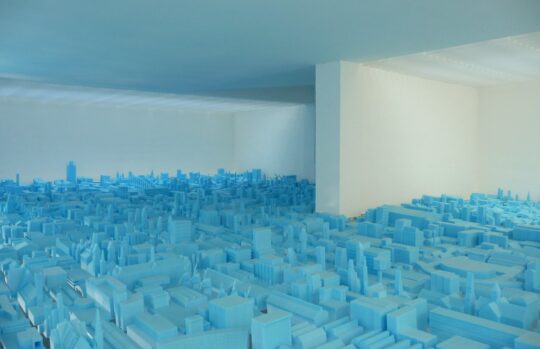
Place­book was at least part­ly inspired by the won­der­ful Rietveld Land­scape project Vacant NL. It con­sists of a huge 3D mock­up of all the emp­ty build­ings in the Nether­lands — a blue “sea of vacan­cy” — and is accom­pa­nied by an atlas detail­ing all struc­tures it encom­pass­es. The project, which was pre­sent­ed at the Venice Archi­tec­ture Bien­nale 2010, can be seen as a chal­lenge by Rietveld Land­scape to Dutch pol­i­tics which has talked about want­i­ng to make our coun­try one of the top cre­ative economies of the world at length, but at the same time have allowed vast quan­ti­ties of space, that could be used by the cre­atives, to sit emp­ty and unused.

How the cur­rent polit­i­cal cli­mate will affect the chances of new archi­tec­tur­al play­grounds for cre­atives actu­al­ly emerg­ing is to be seen. But it is clear to me at least that peo­ple, when giv­en the oppor­tu­ni­ty, can do won­der­ful inter­est­ing things with old build­ings, and that these things ben­e­fit cities at larg­er orders of mag­ni­tude much more than they cost.

In the mean­time, I will con­tin­ue to con­sid­er how game design­ers can has­ten change in this domain.

Posted in Articles | Tagged , , , , , , , , , , | Comments closed

From the trenches of project Maguro, part 3

Project Maguro is fin­ished and on this Mon­day, we’re doing a quick eval­u­a­tion. Enter­ing the war room pro­vides us with an inter­est­ing sen­sa­tion. It’s as if we can still smell the gun pow­der. Hear explo­sions faint­ly, in the dis­tance — but only when lis­ten­ing intent­ly. Sit­ting down, it feels like we’re expect­ed to start crunch­ing again. But all that is his­to­ry now. At the end of every­thing, what remains is for­mal­i­ties, food and fun.

It takes a while for the real­iza­tion to tru­ly sink in. The project that kept Kars, Karel, Alper, Simon and me busy dur­ing the ear­ly part of 2011 is done. It’s been deliv­ered to the client, as well as to the clien­t’s client. And all lay­ers of client seem to be hap­py. Which, in turn, makes us hap­py.

By the time you read this, our project has been revealed as being called Code 4. And the ‘large gov­ern­men­tal organ­i­sa­tion’ we made it for, turns out to be the Dutch Tax Admin­is­tra­tion. Cur­rent­ly the game’s had mul­ti­ple runs and should be caus­ing orga­ni­za­tion­al change like there’s no tomor­row, right now.

Asked by Kars how I feel about the project, the thoughts that pop up are not real­ly about Maguro — they’re about me, and about these oth­er guys. As a writer, free­lancer, web guy, I’m used to work­ing alone. Twit­ter, Face­book and e‑mail are my only con­tact with the out­side world. Projects seam­less­ly flow into one anoth­er. I don’t think about my process­es, they just hap­pen instinc­tive­ly. All that changes when you work in a team. Which took a while to adjust to — but I think I nailed it in the end.

And what a team it was. I guess it felt like being in a rock band because that’s what I asso­ciate with a bunch of smart, too-cool-for-school kids, each com­plete with their own incred­i­ble super pow­ers. (That’s a link to the first part in this series, which is wrapped up by this post. Be sure to also read the mid­dle episode. You know what they say about mid­dle episodes in trilo­gies.)

I then say some­thing about the game’s iter­a­tive devel­op­ment process, which revolved so fast that each pro­to­type felt more like a tram­po­line than the intend­ed qui­et moment of reflec­tion. It’s a mir­a­cle that in the end, the plan got togeth­er — which I love. Or maybe it’s just a lot of intel­li­gence, expe­ri­ence, hard work and per­se­ver­ance stacked togeth­er. In a box. With a rib­bon.

We head out to Luce, where they serve great cock­tails and grap­pa, it turns out. The food is nice, too. An iPhone game called Coin Drop is dis­cussed, which I dis­miss as being a poor man’s Peg­gle, but end up spend­ing the next few days get­ting all of the game’s stars any­way. Next, we deter­mine that the idea that doing some­thing in real life is always bet­ter than doing it vir­tu­al­ly, is a decid­ed­ly calvin­is­tic way of see­ing things. After which we all agree that games are real­ly about learn­ing to learn.

Late at night, Karel starts draw­ing up two of the game con­cepts swirling around that enig­mat­ic mind of his. Nat­u­ral­ly, the end of project Maguro is the begin­ning of some­thing new.

Posted in Projects | Tagged , , , , , , | Comments closed

Speaking at CoCities Salon Amsterdam

Cog­ni­tive Cities cer­tain­ly has been the most stim­u­lat­ing con­fer­ence of 2011 for me so far. (Despite the few short­com­ings I report­ed on ear­li­er.) So I am super glad it is get­ting fol­low-up in the form of a salon in Ams­ter­dam. Tomor­row.

And I will be speak­ing.

So, Thurs­day June 30 in TrouwAms­ter­dam’s Verdieping: Cog­ni­tive Cities Salon Ams­ter­dam with James Burke, Katal­in Galayas, Edwin Gard­ner, Juha van ‘t Zelfde and myself. Doors open 19:00, entrance fee 10 Euros.

I’ll do a reprise of New Games for New Cities, which I first pre­sent­ed at FutureEv­ery­thing. I am very glad to get anoth­er chance to share these ideas at what I am sure will be a great meet­ing of minds.

(Sor­ry about the many speak­ing announce­ments around here late­ly. I promise we’ll get back with some prop­er con­tent soon.)

Posted in Upcoming | Tagged , , , | Comments closed