Next to our work with clients, we regularly initiate research projects. Their aim is to investigate subjects in the fields of society, politics, policy etc. that spark our interest. We use our research projects to contribute to debates in these areas by creating playable prototypes.
At the moment, we are working on AJI. This is a project about civil disobedience and public protests. The idea to work on this was sparked by recent large-scale protests that return public squares to their function as platforms for civic resistance while making heavy use of social media. This pattern has been effectively captured by Dan Hill with the hashtag #piazzaplussocialmedia.
We’ve been working on AJI since the beginning of July and are making good progress. A first software prototype has been played with and iterations are underway. In the meantime, we thought we’d share some notes on AJI’s background.
This post is a bit of a conversation between Alper and myself and we’ll publish it in three parts over the course of this week.
Alper, to kick things off, can you talk a bit more about some of the precedents I touched upon in my introduction? What are recent examples of public protest relevant to AJI?
Alper Cugun: Living in Berlin and working near Kottbusser Tor in Kreuzberg protests are a part of daily life. You can’t drop a hat without encountering a protest—this happened just underneath my studio—and there’s no cause too small for it not to have a solidarity rally associated with it. The scene doing this is relatively big but simultaneously it is limited to a group of people for whom this is a lifestyle.
As a spectator of demonstrations and protests of all sorts I questioned what the rationales are behind participating in a protest and on what factors participating in a protest depends. Besides the practical considerations of place and time, the topic and ideology of a protest and the position of your social circle on the subject seem to be large influences.
Then suddenly Diren Gezi Park happened in Istanbul. This took place in a country whose language I speak and with an ideology of pluralism and non-violence that I subscribe to. I spent a lot of time trying to keep track of the happenings via Twitter and other channels and was mildly successful. I even got featured in the Times with a tweet.
This led me to wonder if we could pick up our old thinking on the topic of cities, play and civics and apply it to this space. Kars, what do you think back to if we talk about that string of presentations we prepared in the last couple of years?
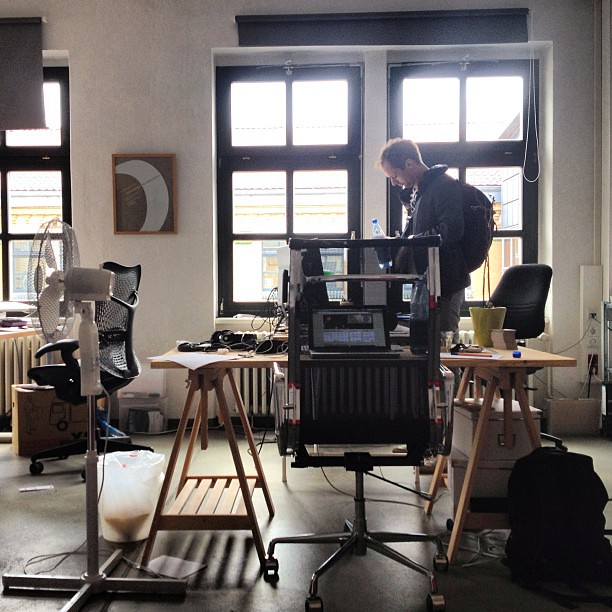
Last week was awesome because Kars was in Berlin for most of the week working from KANT. We have a highly functional way of working-apart-together setup which powers most of the studio’s work but there is a level of creative energy that is hard to achieve over a FaceTime connection. Besides that we also did a whole lot of housekeeping as well as eating and drinking both of which are easier when you are in the same location. Hubbub will be changing and growing in the future.
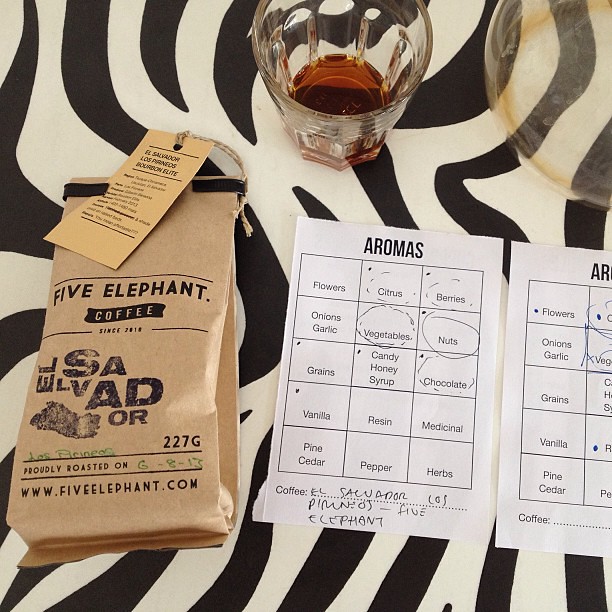
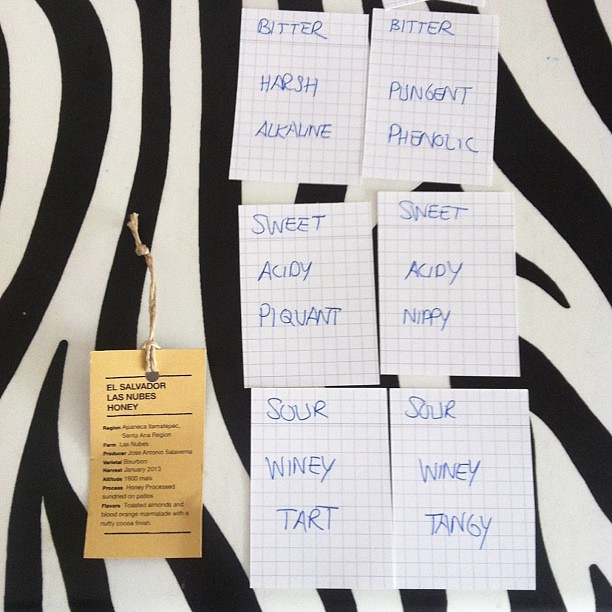
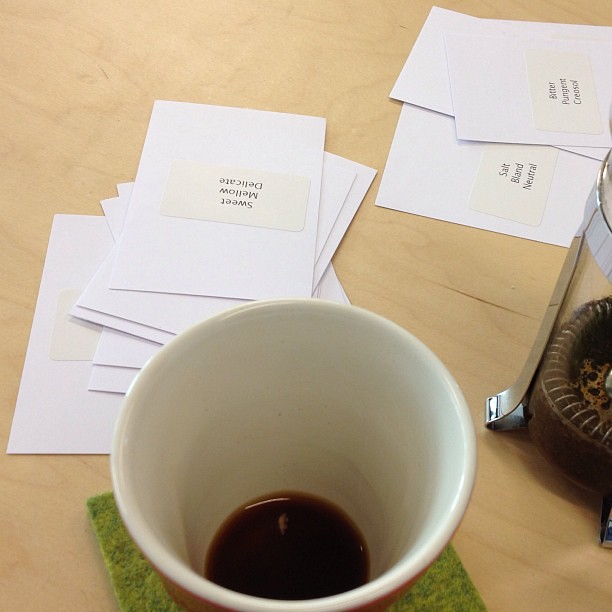
We spent some time this week on our Cuppings coffee tasting game. Besides being the purveyors of a reasonably successful coffee guide we thought we could combine our interests in both games and coffee to create a game that demystifies the coffee tasting process. Our current playtests are highly encouraging and this is something that you should be able to play soon.
AJI is an important focus at the moment. We are working out our our design notes on the piazza + social media space which are due out this week. I had already built a workable prototype for the provocation we want to launch but it also needs to look good. We are going to spend considerably time in the next weeks before I head to Tokyo to make it look good and then show the world.
Consulting, proposals and new things are moving forward slowly which is what is to be expected during the height of August.
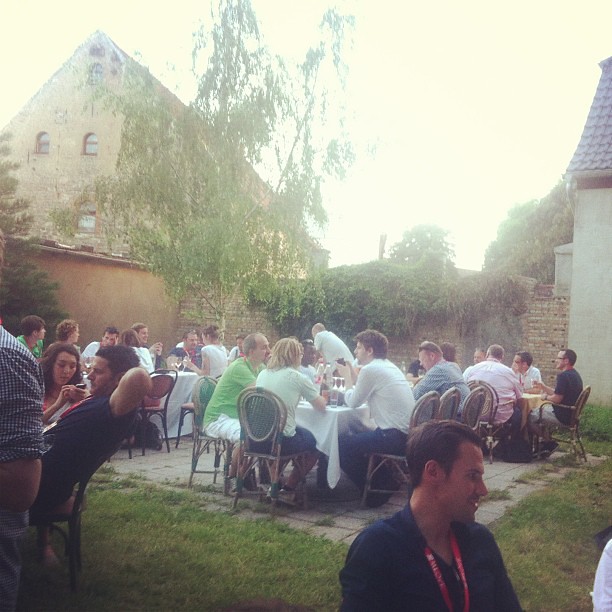
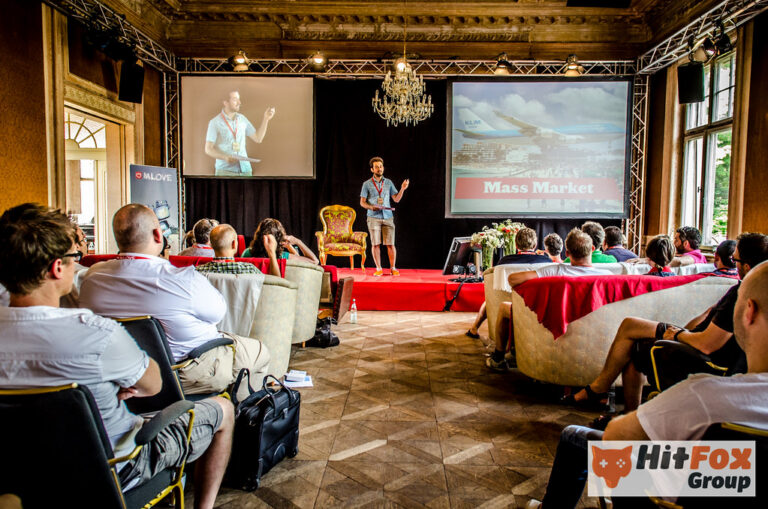
A while back I ventured out to the MLOVE ConFestival at a castle somewhere in Saxony-Anhalt to join my fellow Dutchmen Maarten den Braber and Yuri van Geest to present about the quantified self and our perspective on data and its social consequences as game designers. Any time you use technology to try to influence human behaviour, you have to be especially sensitive to existing power relations and how they will influence usage.
I did a lot of research and I found the discourse on QS to be limited and lacking consideration for the larger contexts (as Saarinen would say) the work will fit into. The term QS is often stretched to the point where it encompasses more or less everything and a flurry of gadgets are being developed for all situations. Within all of this Joshua Kauffman touches on some of the ethical issues but the person whose writing was most valuable was Buster Benson. Somebody whom we have been admiring for a while and whose websites we have used regularly.
MLOVE was a refreshingly laid back event. Taking everybody out of the city and putting them in a castle on the countryside has a very positive effect on the interactions people have with each other. The Q&A we did at the end of our session was also one of the most stimulating and topical ones I have ever had the pleasure of participating in.
At Hubbub, when we design for motivation we usually approach it from the lens of Self-Determination Theory (SDT) which puts the needs and desires of the user at its centre and provides us with a good framework to start ask questions from. The basic needs for intrinsic motivation according to SDT are:
Autonomy, allowing people to control their own directions
Competence, helping people become better in things and giving them feedback on it
Relatedness, situating people’s actions in a social context
When it comes to the recording and application of data there are a ton of hairy issues1 that are not going to be solved anytime soon. We think most of these issues can be mitigated by designing for users and keeping their autonomy front and centre. For companies operating in this space, which is turning into most of them, properly designing the behavioural aspects of your products is the only way to guarantee that they will be used in the future.
An in depth exploration of data ethics is beyond the scope of this piece but just to list some of the issues here: insight into the obvious, interpretation errors, overmodeling causing poorer results, juking the stats, fallacy of informed consent, the certainty of scope creep [↩]
I’m writing up two weeks in one go, for no particular reason other than that I was on a short holiday in Stockholm last week even though it was my turn to do notes. For shame. (STHLM is a recommended destination, I should add.)
Alper wrapped up project SAME together with Sebastian. They documented the output from the workshops and handed over to the client. I look forward to seeing how things will develop at the client’s end, they have a very interesting challenge ahead of them.
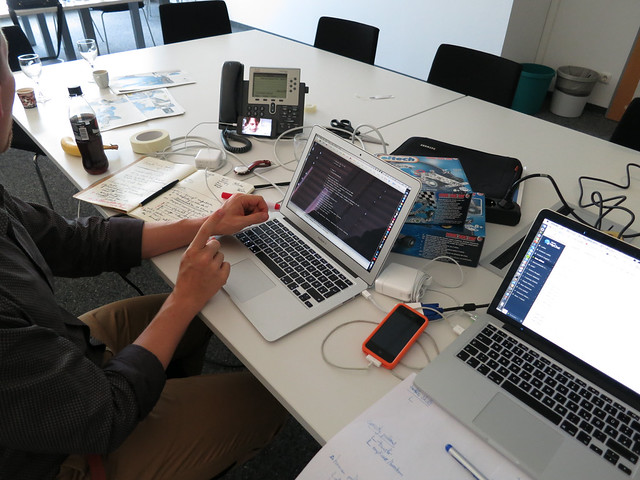
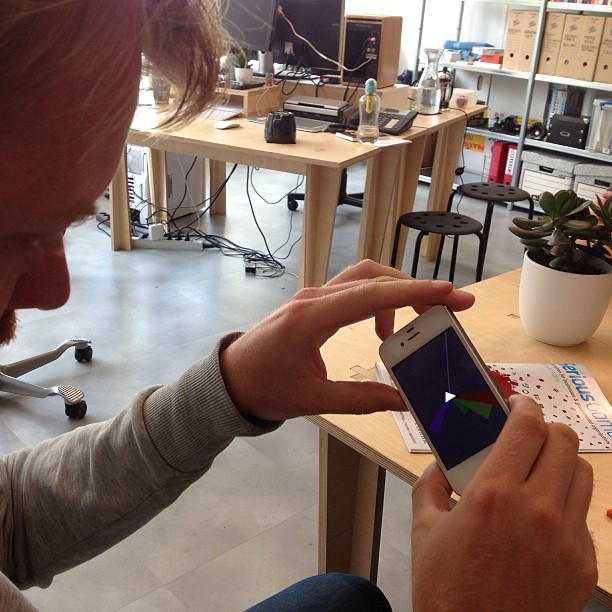
Project AJI—the self-commissioned research project we’re working on this quarter—saw some action with Alper banging out a first minimal prototype. I played around with it, suggested some improvements and we have set a target for the next iteration.
Work on Beestenbende continued, too. I had a very productive work session with the museum’s education expert. We went through the game front to back and made numerous copy improvements. I really enjoy the fact that we’ve managed to create a very collaborative working relationship with the museum. It makes what could be incredibly painful processes a lot of fun in stead.
Those copy updates required some interface adjustments, which I made shortly after and Alper wrapped everything up and sent a new version to the museum, ready for another round of testing.
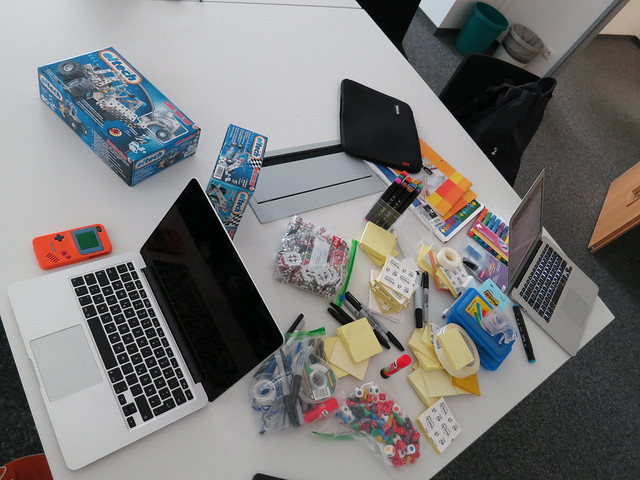
For ASARI, I decided to build a digital prototype of the “infographic toys” we’d come up with earlier. Since so much of the fun of playing with these things will come from their feel and their micro-interactions, it made sense to do this. Sketches and written descriptions would simply leave too much up for interpretation.
I also went over to Info.nl to hand over the prototype and documentation to their lead developer.
Finally, in the past two weeks I published two blog posts. One on how we currently approach design consulting, and one an interview with Marc Fonteijn about the documentary film Making Progress.
We’ve been doing quite a bit of work lately that for lack of a better term I’ll describe as “design consulting”. The work is about helping organizations understand how games and play can be applied meaningfully to real-world issues and complex systems.
Part of this is us having conversations with people at those organizations. We try to demystify games—getting to what makes them special and what they do well—and debunk a lot of hype surrounding their potential to “save the world”.
These conversations are essential, but only because they help us get to the important and consequential part: collaboratively sketching and prototyping possible design directions. This is where imagination and invention meet the organization’s goals, the context they operate in, their audience’s needs and wants, the technology and existing products we might be dealing with, etc.
The process is workshop driven, usually consisting of a number of sessions in which we progressively move from understanding the design space, exploring possible directions and finally proposing promising ideas in the form of sketches and playable prototypes.
On our side, one or both principals are involved and we frequently bring in extra folks from our network with expertise relevant to the assignment. People on the client side usually include the product owner, technology leads, audience and/or subject matter experts, etc. If our client already has a production partner, we like to involve them too.
The timespan and effort are usually short and focused: as little as a couple of days spread across one to two weeks. Sometimes less, sometimes a bit more. We’re quite flexible.
This is probably a familiar process to many. Delight and excitement usually results from our hands-on approach, the experience with inventing and building new kinds of play that we bring to the table and our relentless focus on making things that are enjoyable and meaningful to people, that engage their creativity and sense of community.
Recent examples of things we’ve worked on in this manner include:
a workplace game about complex safety issues for a global oil firm,
data-driven games and playful interactions for one of Europe’s largest dating portals,
games integration for the companion website of a nature show on Dutch national television,
gameful design principles for a start-up building a career management platform,
a game-like training program for workers of an automobile manufacturer’s yet-to-be-built plant.
In other words: the range is huge, which is just the way we like it. If you have something to challenge us with, do drop us a line.
Last week was a decisive week for both ASARI and SAME, projects in two countries that both went through their final phases.
Kars prepped ASARI for a client presentation. He went through the concept with the Info.nl design team and sketched out our concepts for the final presentation which was received well. We have thought up a bunch of toy-like info-graphics that should provide interesting and fun insights into the scale of the works. We also came up with an outdoors activity that we can tie back into the website. Kars then started to prototype everything out in Processing.js to make it precisely clear what we want to achieve.
I prepared for SAME and flew to Munich to workshop with our client there on Wednesday and Thursday together with Sebastian Deterding. We dove straight in and got invaluable time with subject matter and cultural experts to calibrate our thinking with. In our two days there we managed to run through the full course of ideation, clustering, conception and playtesting. We also called Kars in on Skype to get some of his input. Compressing all of this into such a short timeframe is a creative tour de force but it does provide highly valuable insights.
The updated Beestenbende is doing what it should and we should be moving forward with finalizing those improvements and distilling a new release to deploy in the museum.
I spent most of Friday doing a 3D programming course organised by my friends of UIKonf and given by Stijn Oomes. We spent the day diving into both SceneKit and OpenGL ES and talking about the upcoming SpriteKit framework in iOS7 which is supposed to make life for game developers a lot easier. I may apply some of these skills in an upcoming project, but for now just a refresher in 3D programming and how the pipeline works on iOS was really valuable and fun.
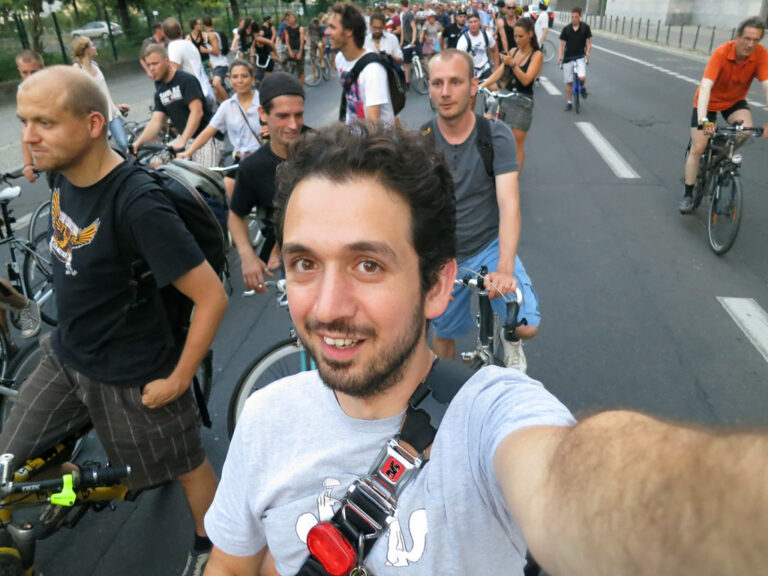
And that same Friday I attended the Critical Mass Berlin. Bicycle culture and the reappropriation of the city are things that are close to our hearts and this particular event turned out to be a particularly fun celebration of cycling.
I will be representing Hubbub at Playful, Mozilla Festival and probably at Gamecity as well. Which means I’ll be in and around London for most of that week in October.
Not too long ago I was interviewed by Marc Fonteijn of service design studio 31Volts, about how I approach the work that I do. Marc and his colleagues have collected a number of those interviews into a documentary film titled Making Progress. I decided to turn the tables on Marc and ask him some questions about the project. You can find his answers below.1
What is Making Progress?
“Simply put, Making Progress is a documentary about the people that successfully create progress. For the documentary we interviewed 7 people ranging from Wilco van Rooijen who climbed the highest mountain on each continent in the world to Geert Kops who is a professor at the University Medical Center Utrecht doing cancer research.
For us, Making Progress was also a journey in which we stepped out of our own community of practice (service design) and went looking for other people. People who are also devoted and passionate about doing something meaningful in order to create a better world.”
Why make a documentary film about progress and innovation?
“We all know that the challenges we face are getting more complex each day. And everyone seems to be looking for new ways to approach these issues. The thing is that there are tons of (management)books about innovation and the pile is growing every day. Each book gives you even better tips and best practices on how to innovate. But if you look closely you’ll notice that somehow it’s very hard to find the people who actually innovate: the practitioners, the ‘innovation’ craftsman, call them whatever you want. It’s like having a million cooking books but there’s no one who can actually show you how to create a delicious meal.
We use design to make things happen. Design is a process that by nature is very action oriented. We actually do a lot of stuff, get feedback and then reflect on that. Do in order to think, if you will. I think design is a very attractive alternative approach to create value when the issues you’re dealing with are complex and fuzzy. But instead of looking at how (other) service designers work we got very curious about how people in completely different fields make things happen, create value… make progress.
A lot of expertise that makes a difference in practice is hard to capture in checklists and flowcharts. You won’t become a master chef by just following a recipe. We transfer this kind of knowledge by talking to each other and sharing our experience. That’s why we sat down with some people for a chat, turned on the camera and talked about how they work.
The goal of Making Progress is definitely not to find the ultimate truth about innovation. Far from that. We hope that the documentary will inspire a discussion about how we approach our current challenges. Let’s see what we can learn from each other.
And let’s be honest, you can’t read your way out of a crisis. You actually need to make things happen.”
How did you approach this project? What did your process look like?
“Looking for life in outer space? Trying to find a half brother in South America? I don’t know. But we had the feeling that there must be more people that share the ideas behind the design approach. Let’s find them!
Explorers. That’s the best way to summarize the people we were looking for. People who in their own field have done something that hasn’t been done before. People who embrace uncertainty and turn that into new value.
We used our networks to find these explorers. Which wasn’t easy because we weren’t interested in the position someone has (eg. it doesn’t mean a lot that you’re the chief innovation officer) but in people with a certain mindset and attitude.
Once we had some explorers we basically sat down with them and talked about the things that are important in their work. The most fun themes we talked about were related to gut feeling like “how do you know you’re on the right track”.
Oh and finally of course there was a lot of video post-processing.”
Without giving too much away, what did you learn in the making of this film?
“I’ll keep this one short. One super interesting pattern we saw in our conversations is that physical as well as mental space plays a crucial role in making progress. We seem to underestimate the value of what having room to play with/in does for our creative process.
If I look back on our process, I’m very happy that we left enough ‘blank-space’ to benefit from things we didn’t anticipate beforehand. The worst thing that can happen is, that you skip the interesting bits because you need to ‘stick to the plan’.”
What’s next for the project?
“Right now we’re working hard toward the premiere on September 12th. After that we hope that a lot of people will take the initiative to organize a screening in their own community. On December 11th (11/12/’13 @ 14:15) we’ll publish Making Progress online.
The thing also excites me is that by Making Progress we also stumbled on new questions worth exploring. Questions related to education, bottom-up vs. top-down organization and the role teams play. But I also have the feeling that we’ve just scratched the surface with the people we’ve interviewed. There must be many more people making progress out there with a story. That story deserves a stage.”
Thanks Marc!
The film including the teaser above is in Dutch. But this post should give you an idea of its contents regardless. [↩]
In Berlin, Alper spent time preparing for an upcoming two-day workshop on-site for SAME. He’s chewing on complicated stuff together with Sebastian, involving on-the-job learning in an unfamiliar culture. We’re looking at applying principles of self-determination theory and we need to do as much of it with analog means. No mean feat.
Meanwhile, I mostly worked on ASARI, visiting Info.nl for meetings with the design team twice, and iterating on my concept sketches for game-like interactions. I was quite pleased with how after many rounds of revision, a somewhat predictable mini-games-based idea has morphed into an interesting mix of infographics and toy-like interactions.
Even though each of us is actively working on one of these projects, we’re getting better and better at building in time for quick, focused discussions that improve the quality of our work tremendously. You could call it WAT: working apart together.
Besides client work, we are committed to pursuing more self-commissioned projects. At the moment, this is AJI: an investigation into playfully augmenting civil disobedience and “piazza plus social media”. I hashed out screens based on the minimal-viable set of user stories we had agreed on after some discussion. Alper then sat down to bang out a first prototype, which I will have to take a look at soon…
More extracurricular activity took place in the form of playtesting on the coffee tasting game I’ve been thinking about for far too long already. Alper had a go together with Peter at KANT and provided me with valuable feedback. I have a list of things I want to tangle with, now to just make the time to do so.
Speaking of KANT—the new workplace Alper has taken residence in and therefore also Hubbub’s new base of operations—a new overview of what all of KANT’s illustrious residents have to offer has gone up.
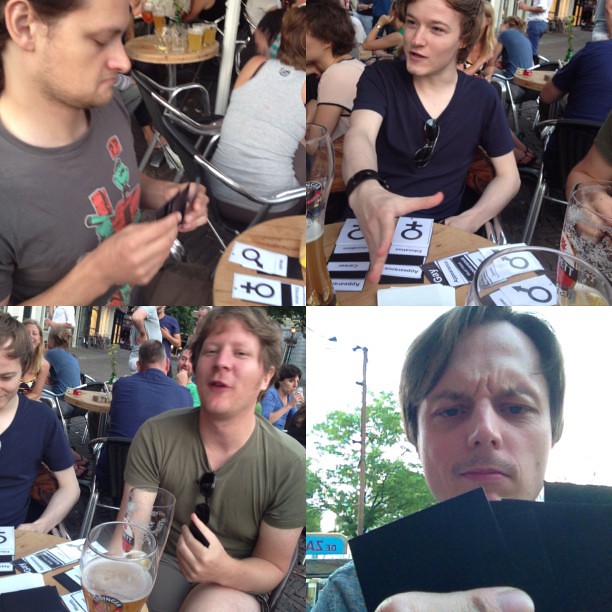
In Utrecht, I closed off the week with an excellent FRIDAYS AT 7. We had a nice turnout, most notably Joris Dormans, who put all game designers present to shame by bringing not one but three game prototypes (one digital, one boardgame and one cardgame). Naturally, we played all three of them and were more than entertained.
Last week got us into a good rhythm for our summer engagements. A quick slice from our current stack.
Kars prepared and facilitated the second workshop for ASARI where tons of sketching resulted in a roughly final concept which can go up for presentation before the start of the first design and development sprint. Kars and I also brainstormed a bunch of fun games to add to the final product to give it that elusive fun factor but still keep the necessary broad appeal. Some of these are really extremely fun and I hope they make it into the final site. Kars sketched these out for presentation in the next session.
We’re approaching the next workshop session for SAME and preparing for that by getting more context information from the client. SAME revolves around a very challenging problem for a very large company but at the same time we are also getting a lot of freedom to work in and contribute our bit to the solution. Very exciting stuff and I hope to be able to share stuff from that here at some point.
We shipped the new version of Beestenbende to the Universiteitsmuseum and we look forward to seeing their reactions on the simplified game flow.
AJI is a new project where we will be making things to explore the social issues we treated in presentations over the past years. We find that the approach that best fits with our sensibilities is to deliver stuff that does something. This means prototypes, games or products that generate the experiences we want to convey. We sketched out the screens for this app and it should go into development next week.
I am going to be presenting on this year’s Retune, preferably on AJI but I think our recent approach to creative consulting as well as our principles for creating games are also germane. It is going to be lovely and it is organized by some very nice people, so if you’re in Berlin then you should get a ticket.
Kars reviewed Perceptor’s upcoming puzzle art game. We’re not really fans of puzzle games, but we can tell if something is well made (not that we expected any different from these guys). Look for this to be in an app store near you soon.
Kars iterated the KOHI coffee tasting game prototype and did a playtest on it. We’re trying to demystify the coffee tasting experience and create a fun experience where you help each other refine your palates. Coffee is an ongoing interest of ours and we hope to use this game to improve coffee tasting for ourselves and others.
It’s an absolutely gorgeous summer day outside. One of the first of the year, in fact. Sun may not be noteworthy in your part of the world, but this is the Netherlands so it totally is. You can imagine the willpower it takes for me to stay inside and write this. Anyway, on to what we did last week.
Alper tells me he spent most of his time working on Beestenbende. This was the last week before the new version’s release, so he had his work cut out for him. We got a nice rhythm going, him ticking of stuff in our sprint backlog as he committed code, myself testing it all, catching the odd bug. I also tweaked copy and art to match the slightly adjusted game play. The new version is easier to pick up and play. We mostly took out stuff, streamlined interactions, etc. I can’t tell you how nice it is to get another chance to polish a game that was already quite well done.
We do a lot of consulting lately. Although I should qualify that and say our consulting is less about talking through slide decks and discussing and more about collaboratively sketching and prototyping. The former can be useful, but the latter is more suited to our temperament. To this end, Alper put some time into preparing for upcoming engagements. Meanwhile, I participated in a workshop focused on the creation of a new physical space for playful culture—which was supported by a luxurious amount of graphic facilitators. I also co-facilitated the first workshop for project ASARI on which we are collaborating with Info.nl. This is about enabling people to experience future outcomes of large public infrastructure projects.
Odds and ends:
Alper continued to meet with new and interesting Berlin people. Similarly, I had a few nice chats with potential new clients at the monthly Dutch Game Garden networking lunch.
And finally, I headed to Dalfsen to attend a photo shoot for an upcoming Dutch Design Week exhibition on designers and farmers, which Pig Chase is part of. Predictably, the humans (me, Irene and farmer Dick) were upstaged by a rather fetching piglet.



Notes on project AJI (part 1)
Next to our work with clients, we regularly initiate research projects. Their aim is to investigate subjects in the fields of society, politics, policy etc. that spark our interest. We use our research projects to contribute to debates in these areas by creating playable prototypes.
At the moment, we are working on AJI. This is a project about civil disobedience and public protests. The idea to work on this was sparked by recent large-scale protests that return public squares to their function as platforms for civic resistance while making heavy use of social media. This pattern has been effectively captured by Dan Hill with the hashtag #piazzaplussocialmedia.
We’ve been working on AJI since the beginning of July and are making good progress. A first software prototype has been played with and iterations are underway. In the meantime, we thought we’d share some notes on AJI’s background.
This post is a bit of a conversation between Alper and myself and we’ll publish it in three parts over the course of this week.
Alper, to kick things off, can you talk a bit more about some of the precedents I touched upon in my introduction? What are recent examples of public protest relevant to AJI?
Alper Cugun: Living in Berlin and working near Kottbusser Tor in Kreuzberg protests are a part of daily life. You can’t drop a hat without encountering a protest—this happened just underneath my studio—and there’s no cause too small for it not to have a solidarity rally associated with it. The scene doing this is relatively big but simultaneously it is limited to a group of people for whom this is a lifestyle.
As a spectator of demonstrations and protests of all sorts I questioned what the rationales are behind participating in a protest and on what factors participating in a protest depends. Besides the practical considerations of place and time, the topic and ideology of a protest and the position of your social circle on the subject seem to be large influences.
Then suddenly Diren Gezi Park happened in Istanbul. This took place in a country whose language I speak and with an ideology of pluralism and non-violence that I subscribe to. I spent a lot of time trying to keep track of the happenings via Twitter and other channels and was mildly successful. I even got featured in the Times with a tweet.
This led me to wonder if we could pick up our old thinking on the topic of cities, play and civics and apply it to this space. Kars, what do you think back to if we talk about that string of presentations we prepared in the last couple of years?
Continued in part 2.