A large chunk of my time this week was taken up with contributing to E‑Motive Day, a conference organised by an international network of organisations working on social change of various kinds. We were asked to demo Standing, and talk about our perspective on playful design for activism. People said nice things about both and I had interesting conversations about a subject that I hold dear.
Meanwhile, work on KUMA continued apace. I went over to KLM to review storyboards, and handed over feedback to Tim for a first version of mockups. It’s been a pleasure to see the first few of those roll by in Dropbox already.
Finally, I prepared two upcoming workshops. One is together with Jeroen for Berenschot, about using adventure games to increase awareness of integrity issues in the workplace. The challenge here is to design genuine moral challenges for players, in stead of obvious right/wrong choices.
The other is for a group of exhibition design students at Reinwardt Academy, about playful design. The plan is to have them remix a famous Peggy Guggenheim exhibition and make a playable scale model of their plan. Should be fun.
We also continued to do marketing on Bycatch. And as we soldiered on this week, we were occasionally delighted by a messages from players sharing their experiences with the game.
The biggest event this week was that we fulfilled the preorders for Bycatch and sent everybody a newsletter with updates. That took up a lot of our time and attention as well as fixing some last minute hiccups and making sure everything was right. At the time I’m writing this I’m seeing the first games arrive at people’s homes on Twitter which is a pretty amazing feeling. We’re now moving towards our official launch.
Drone strikes and inspections using you phone… this looks pretty cool! http://t.co/rRrPL4KmUT
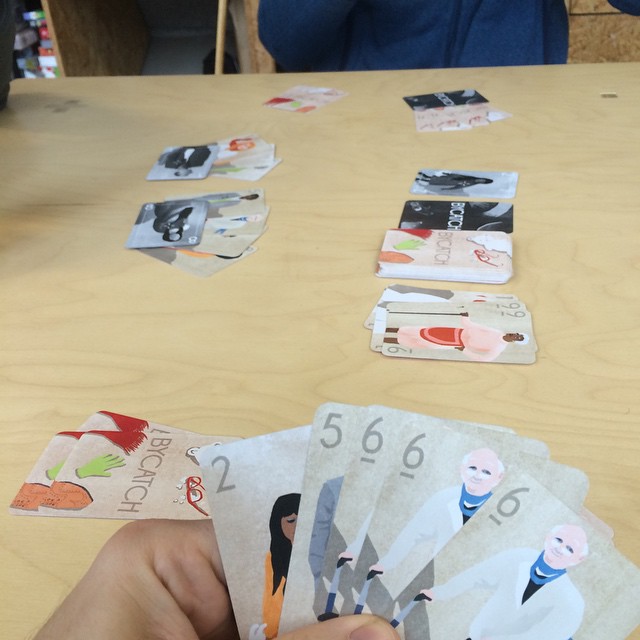
We played Bycatch in the studio with Eelco for the first time with the actual cards and even for us playing the game is still fun.
What also got released is The Gameful World book over at the MIT Press. It’s been a long time in the making but now the definitive book on gamification is out.
We’re working on a consulting engagement for Berenschot. Our work for KLM is proceeding with the content hammered out and Tim Hengeveld starting on the art.
I made a big round of Amsterdam visiting old friends and business prospects before I made my way back to Berlin on Thursday to attend the games.net new year’s party (at the KING offices).
Each year we review our Objectives and Key Results for that year and adjust them for the following one to provide guidance for our studio. The goals summarized are to be the best known and respected playful design studio that works with the best people in the field to deliver value for our consulting clients and pursue relevant projects of our own.
Projects
We started and concluded many self-initiated projects last year which was one of our key results for 2014. We can call the year a tremendous creative success. The projects we have shipped are all in some way front-runners of the wider industry and a great showcase of what our studio model is capable of.
What was new this year is that many of our own projects are becoming their own entities with their own websites, branding and rhythm. This makes it easier to talk about them as things in their own right.
Standing
We completed and launched Standing to critical acclaim and we then updated the app with an attractive visual design. Playful activism is a very important theme in our work and Standing serves as an example of our thinking and practice on this topic. We think that Standing will remain relevant for the foreseeable future and we’ll refer back to it regularly.
Camparc
We conceived and created Camparc for STRP on an open brief and we are extremely happy with the result. Camparc is a very interesting and deep toy, that facilitates play as a performance and includes live video, a recent interest of ours. We will develop Camparc further this year into a standalone traveling attraction.
Bycatch
We started conception and design of Bycatch last year as our first collaboration with Subalekha Udayasankar. This quickly turned into an example of how we think games for serious issues should be designed as well as a viable self-published card game. We will be selling the game this year and talking a lot about Bycatch.
Cuppings
This is an odd one out but we still run Cuppings out of a personal interest for coffee and because it is a great example of uncompromising app design. Sales of Cuppings have been stronger last quarter than they have been ever before so it looks like this little app has a bright future ahead of it.
Communication
One of the most important parts of our work is communicating the value of our process and theory. We haven’t been bad at this last year but we need to be even better this year. The biggest problem is that a lot of things about playful design which are obvious to us aren’t even apparent to our peers, let alone the wider public.
Most importantly this year we have changed our core proposition on the front page of the website to very clearly state the work we do for clients—“Strategy”, “Invention” & “Prototyping”—and we split ourselves into a consultancy and a studio. The consultancy helps organisations do things with games and play, the studio creates playful products.
One way to term our approach would be an anti-agency with Kars residing in Utrecht and me in Berlin. We have a list of regular collaborators for many projects and the connections to be able to get the best people for any job.
We also have an associate program consisting of Ianus Keller, Joris Dormans and Sebastian Deterding which has proven very useful. Associates are people who we have worked together with in a partnership type agreement and with whom we want to keep doing this. We have deployed each of our associates on work this year and we look forward to doing more.
Logistics
The Utrecht studio—our de facto headquarters—moved to Vechtclub XL. We are immensely pleased with the local facilities and network we have there in an irresistible industrial-chique location just outside of the city.
The Berlin studio KANT closed down its location of the past years as subtenants of Panorama3000. We are waiting for our next studio in the newly built addition to the Aufbauhaus Kreuzberg. The new location will have all of the benefits of Berlin without its transience.
Looking Ahead
We think Hubbub has an unique perspective on designing for the ludic century in which we find ourselves. We think we have honed this perspective over the past years by thinking-through-making and we look forward to sharing it with you in the coming year.
A large part of this week was taken up by our annual OKR review and subsequent reorientation of OKRs for 2015. An intensive exercise, but seriously worth it. The technique helps us build learning into our tiny organisation, and that’s very valuable. We’ll share some outcomes of this review in a separate blog post soonish.
Looking ahead, we made good progress on a plan for Camparc Mark II, an improved version of our public space toy, which will debut at the STRP biennale. We expect to be ready to start production on this baby within the next few weeks and will again be working with the great Aldo Hoeben on it. Next to general improvements we have a few cool new features lined up, so you might want to mark your calendars for the event and come over to Eindhoven to play along.
On Thursday Alper and I headed to Fabrique in Amsterdam to talk to their team about our take on playful design, and hear about the impressive range of work they did for the National Military Museum. The subsequent discussions over drinks, about engagement, modelling game economies, and prototyping, were very enjoyable.
We also received the first print run of Bycatch this week, and had a lot of fun unpacking the shipment and admiring the quality. This means we’re now ready to start fulfilling the preorders we’ve received so far, as well as send out preview copies to select publications. I’m very excited—and a little apprehensive—about seeing what people will write about our strange little game.
By chance, our friends at Playful published Subelakha’s talk about the design of Bycatch this week also. So you can go and have a look at that and hear about the origins of the project and some of our design considerations.
Other than this, I continued to work on the mockups for KLM, while Alper ran around and had lots of meetings with potential new clients, friends and peers.
To make the most of the first full workweek of the new year Alper arrived from Berlin to work with me at the Utrecht studio on a number of things.
We kicked off our second project with KLM on Wednesday. I went over to “building 600” on Schiphol Noord to share our preliminary ideas for the series of mockups we’ll be producing to illustrate a game concept. We divided some tasks (KLM will be very much involved hands-on in this) and set some milestones.
Later that day I also briefed Tim Hengeveld on the project, who will likely contribute concept art to the project.
On Thursday, Alper and I went over to Rotterdam to meet up with Simon to celebrate wrapping up our work on Standing. We’ve pushed out a few bug fixes on the 2.0 version and consider the project “done” for the foreseeable future.
Which isn’t to say we won’t continue to think and talk about tools for playful activism though. For example, Standing will be part of E‑motive Day 2015 and I will be there to share our ideas on playful activism.
We’ll also be part of this year’s CounterPlay festival and in all likelihood will also talk about Standing and activism (along with other areas of interest).
From the playful design consultancy & studio @whatsthehubbub, @alper is coming to talk about “design for a playful world” #CounterPlay15
By the end of the week, a big box containing packaging for sending out Bycatch had arrived. We expect the games to be delivered from the printer on January 16 and can’t wait to start sending them out.
On Friday, Alper and I reviewed 2014’s OKRs and started making plans for this year’s objectives. Aldo dropped by to make plans for a second version of Camparc which we hope to be producing for this year’s STRP biennial. And we finished things off in style at the very convivial Vechtclub XL new year’s drinks, but not before sampling the shōchū Alper had brought from Berlin’s Sake Kontor.
HNY! Well, we have three weeks worth of notes to catch up on. Week 278 got stuck in the mail because I was a bit too eager to dive into my Christmas holiday. Week 279 and 280 were uneventful, as is to be expected this time of year. Let’s get into it.
I wrapped up and delivered our work for SocialReferral in the form of a low fidelity clickable app prototype. We’ll stay in touch to see of we may be of service at a later stage again.
I also sent out a summary of the concept we developed for our pitch for the Dutch Museum Association. Next up: Sitting down with all the parties involved to rough out a production plan.
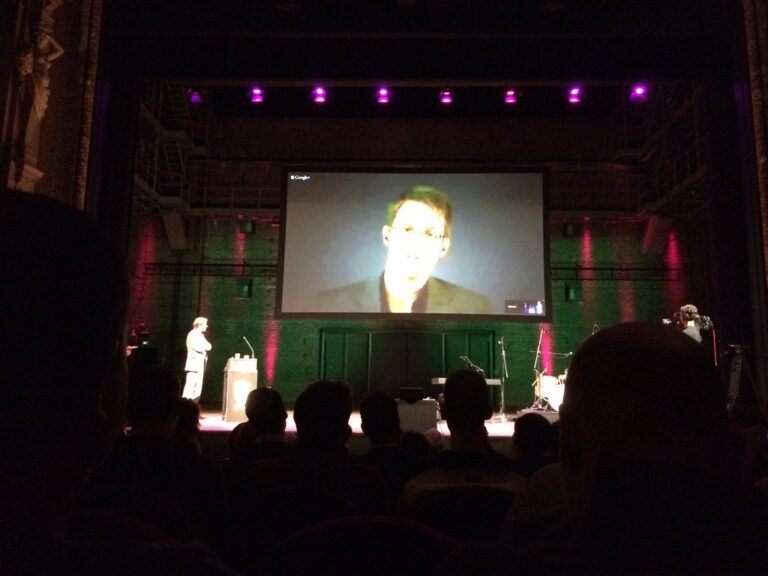
I attended an excellent edition of Big Brother Awards, produced by Dutch Dutch digital rights organisation Bits of Freedom. Seeing Snowden live on a big screen from Russia was quite the experience, as was the rest of the evening. I blogged some quick impressions on the train ride back home that night.
We did some bug hunting and fixing on Standing 2.0. An update will be pushed out soonish.
I started doing some planning on our next project with KLM, which involves producing a series of mockups to visualise the concept we developed for them earlier.
Alper is starting to push harder on marketing Bycatch. I am assisting by sending out the odd email to people in my network. Meanwhile I have been on the hunt for the best packaging material for when we start fulfilling our pre-orders.
Alper has also been driving sales efforts for the consultancy, with an ample range of meetings with interested parties.
Finally, Alper moved out of Oranienstraße 6 along with the rest of KANT. In February they will reopen doors on Moritzplatz, their new space.
Over Christmas and New Year, I took a break and subsequently got my ass kicked by a flu. Meanwhile, Alper caught up on half a decade of PS3 games.
I was intrigued by the expression “goat rodeo” and immediately looked it up. It turns out Ian wasn’t referring to games about chasing goats with lassos. In stead, he’s talking about situations that I tend to use the term “wicked problem” for. Vinay Gupta – the @leashless referred to in Ian’s tweet – has some fun and interesting things to say about goat rodeo:
For all the fancy language used in the complexity consulting trade, we all know the feeling – 14 people around the table, with no clear idea of where they are going, going through the motions of mapping a complex problem with no belief that their respective organisational chains-of-command will every approve any common-sense solution to the problem at hand, and slowly the coffee pot drains, and people consider their pensions. For all the theory, for all the hope for elegant solutions, you know it when you see it and the political need is to be able to name and identify the goat rodeo when it arises, and begin to build an alternative rather than expecting it to be resolved in its current political form. The true goat rodeo is intractable. When you see it, run. If you can’t run, call me.
Really, you should read the whole thing. The quadrants and scale Vinay proposes are conceptual tools I look forward to deploying in the future.
I like the idea of Bycatch being a goat rodeo game. After all, contemporary remote warfare using drones – which is what Bycatch is about – is a goat rodeo. (Then again, maybe all of war can be conceived of as a goat rodeo.) I mean, in today’s drone wars we have different “players” with different goals, and the technologies introduced into this mix wreak havoc with human cognitive biases. Bycatch invites players to act out this goat rodeo. It persuades them to try on the mindset aptly described by Philip Alston in a New Yorker article on Obama’s drone war in Pakistan:
“I think the greatest problem is the mentality that accompanies drone strikes,” Philip Alston, an N.Y.U. law professor who investigated drone attacks for the U.N. between 2004 and 2010, told me. “The identification of a list of targets, and if we can succeed in eliminating that list we will have achieved good things—that mentality is what drives it all: if only we can get enough of these bastards, we’ll win the war.”
Not too long after Playful, I was having drinks with games researcher Jussi Holopainen and we got to talk about Bycatch. He suggested the term “issue game” to describe a category of games that Bycatch belongs to. Issue games, he told me, are defined by the fact that their mechanics model the issue which the game is about. This in contrast to many games for change, which often model the solution to an issue, and therefore typically leave less to the player’s imagination when it comes to deciding their own perspective on the issue. It leaves less room for debate before, during, and after play.
I think issue games are an interesting approach. On the one hand it’s perhaps a less ambitious approach than some of the “save the world” type games we’ve seen in the recent past. But at the same time, I believe it is more powerful because it puts more trust in players, and their power to ultimately decide what a game is about. When it comes to the goat rodeo, there are no easy answers, and with Bycatch, we do not presume to have any.
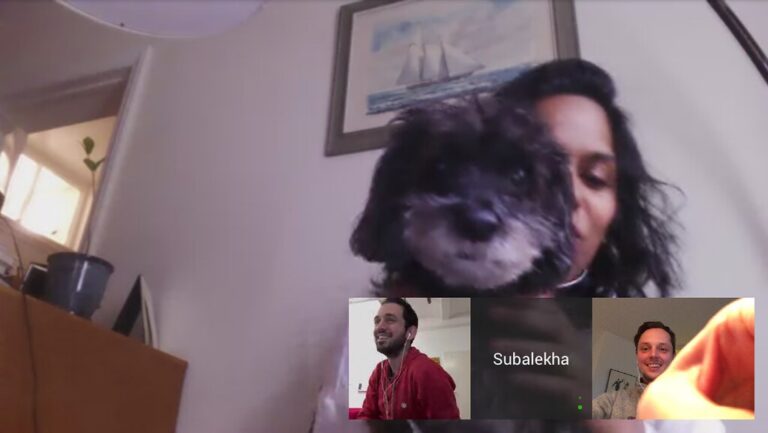
Bycatch now has a BoardGameGeek page which we’ll fill out as we progress. This is great though because now you can already put it on your wishlist and talk about it there. Weekly hangouts about production and marketing are continuing and we’re on schedule for a January release of the preorders.
Kars is working on the user engagement of Dutch recruiting platform SocialReferral. We enjoy working with startups because the scale of their ambition combines well with our practical design approach.
We shipped the production plan on our engagement with KLM and wrapped that up. We will continue to work with them in the new year to further concretize the concept.
We did a bunch of social calls around town to prepare plans for the new year. Kars gave a talk at Creative Mornings Utrecht notes for which you can find on his Tumblr (a video of that talk should also be forthcoming).
Last week we finished a lot of stuff which is really nice.
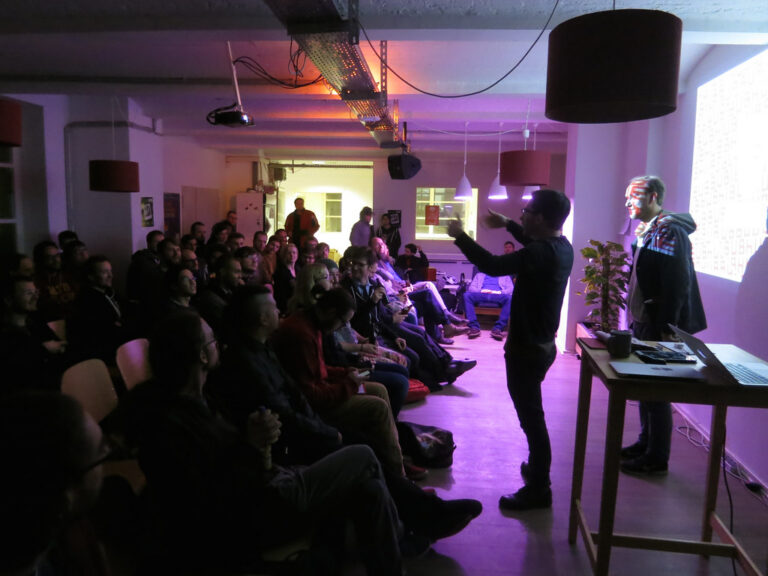
Bycatch is now ready to print thanks to the efforts of Kars and Ties. I presented about the concept at Talk and Play and did an impromptu playtest both of which were very well received. We’re now planning how to tell people about our game in the following months when it becomes available. If you’re reading this you should go preorder your copy and help spread the word.
Standing’s visually updated app is now in the app store review process and will hopefully make it through before the Christmas break. We fixed some last minute things and went over it once more and found that it was ready.
It turns out that the diversification of iPhone sizes complicates things a lot. That is the reason why Cuppings still isn’t optimized for the newest iPhones yet, but we are getting there. We are happy to report though that sales on Cuppings are brisker than ever.
The Gameful World book is now on the MIT Press website and it looks like it’ll be released this year yet.
I ran around Berlin to talk to lots of people and look for an interim office solution.
Kars prepared a pitch for the Dutch Museums Association for a game to let children experience freedom and the lack thereof. This should be pretty awesome if it gets made.
We were plenty busy this week, but much of it was “behind the screens” kind of stuff. So I will keep these notes short, for a change.
Alper had a bunch of meetings, ran another Game Designers Anonymous, did some development on Standing, and planned marketing of Bycatch.
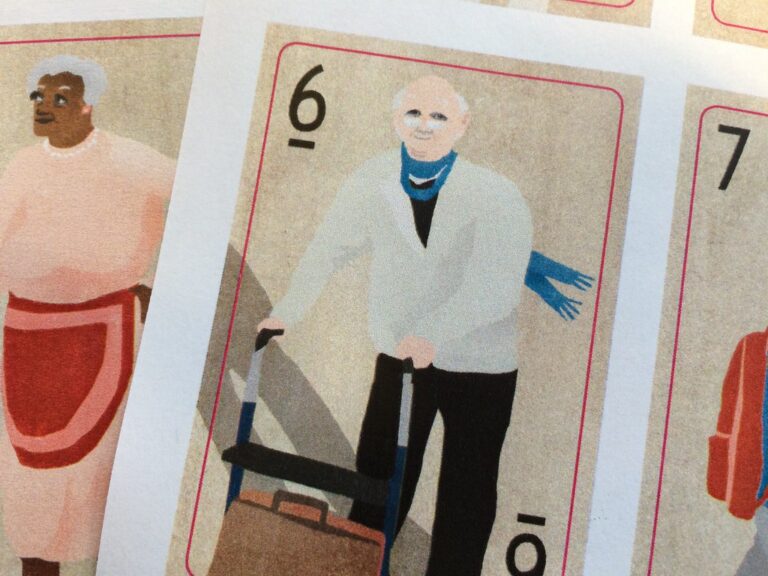
Kars also had his fair share of meetings, and focused on production of Bycatch, which culminated in delivery of the final artwork from Agnes, of which see a sneak preview below.




Week 284
A large chunk of my time this week was taken up with contributing to E‑Motive Day, a conference organised by an international network of organisations working on social change of various kinds. We were asked to demo Standing, and talk about our perspective on playful design for activism. People said nice things about both and I had interesting conversations about a subject that I hold dear.
There were good talks from others too. I was particularly taken with the work being done by CEW-IT in Uganda to empower citizens, Emer Beamer’s efforts to reimagine primary education as design education, and Lino Hellings’s photo walk methodology developed at PAPA.
Meanwhile, work on KUMA continued apace. I went over to KLM to review storyboards, and handed over feedback to Tim for a first version of mockups. It’s been a pleasure to see the first few of those roll by in Dropbox already.
Finally, I prepared two upcoming workshops. One is together with Jeroen for Berenschot, about using adventure games to increase awareness of integrity issues in the workplace. The challenge here is to design genuine moral challenges for players, in stead of obvious right/wrong choices.
The other is for a group of exhibition design students at Reinwardt Academy, about playful design. The plan is to have them remix a famous Peggy Guggenheim exhibition and make a playable scale model of their plan. Should be fun.
We also continued to do marketing on Bycatch. And as we soldiered on this week, we were occasionally delighted by a messages from players sharing their experiences with the game.