
At the start of this week Alper was still in NYC after enjoying another excellent edition of PRACTICE. He did some work on Bycatch with Subalekha and otherwise enjoyed the city before heading back to Europe on Tuesday.
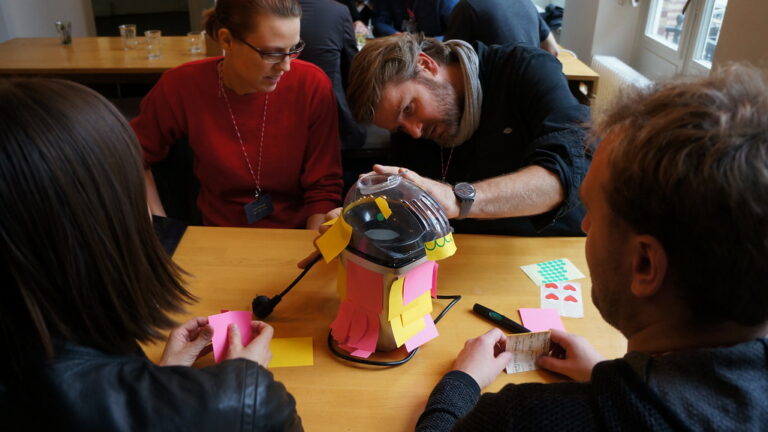
While he was making the crossing, I participated in the first Tegenlicht meetup in Utrecht. We watched the episode on the maker movement and subsequently had a nice little debate with the episode’s director. I also briefly presented on how “making” figures in Hubbub’s practice and why we appreciate working from “maker space” Vechtclub XL, using Camparc as my main example.
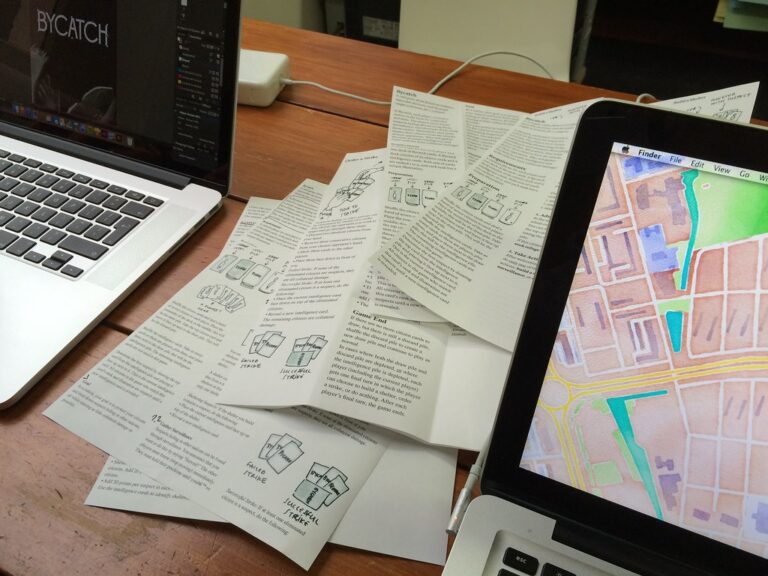
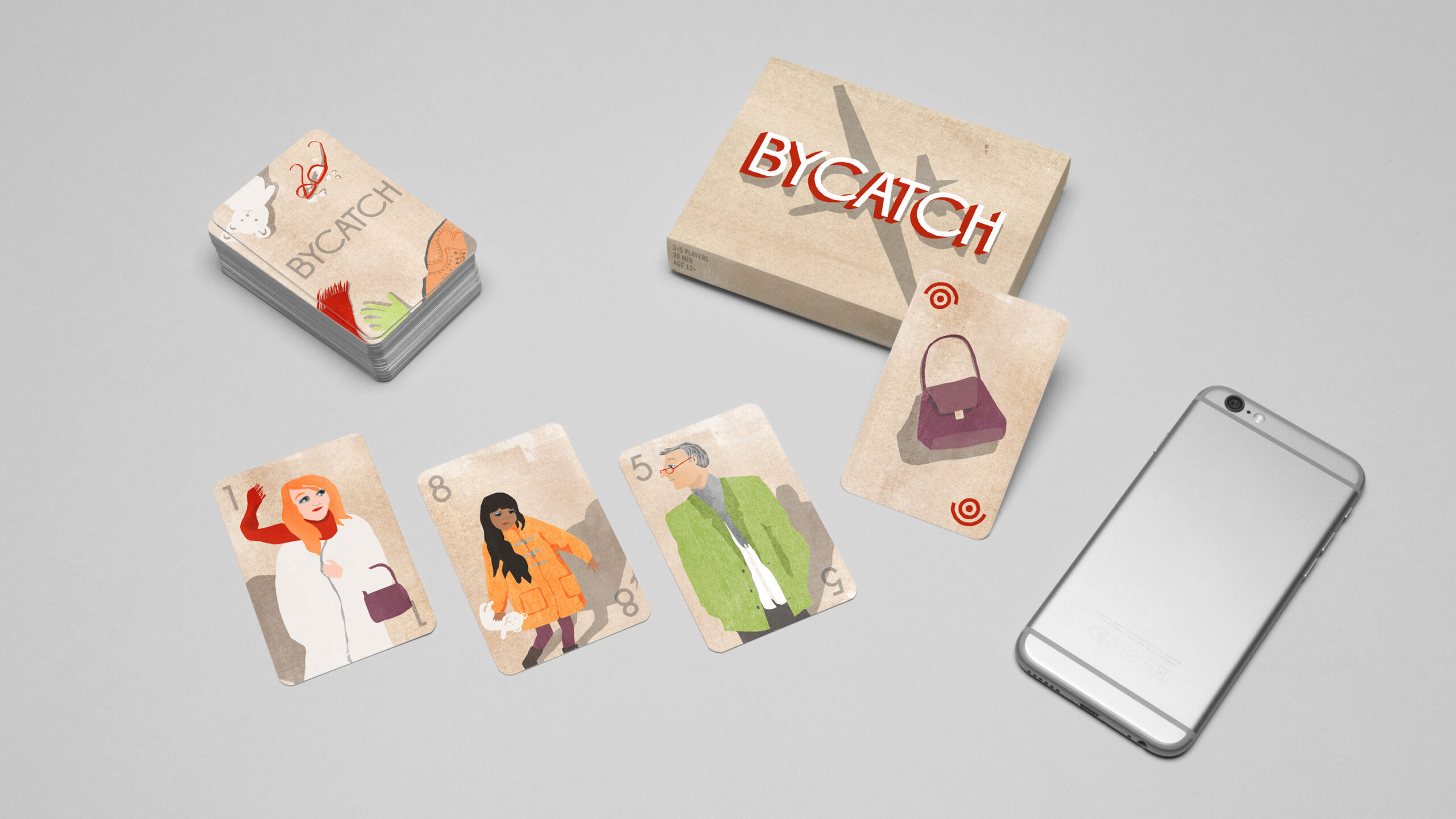
Most of my time this week was taken up by work on Bycatch. I sketched out the explanatory illustrations that will be part of the rules. Our brilliant editor Natalye got the rules’s text in good shape for publication. Agnes sent us a cross-section of all the artwork. On Thursday I went over to Pony Design Club to do rough layouts of the game’s rules, box and cards with my brother Ties.
I also did a little work on Standing together with Simon. We were so close to shipping the visual update when we all of a sudden had to deal with those new iPhones. As a result we’ve been massaging the app’s autoresizing settings in Xcode to get to compatibility. Nearly there.
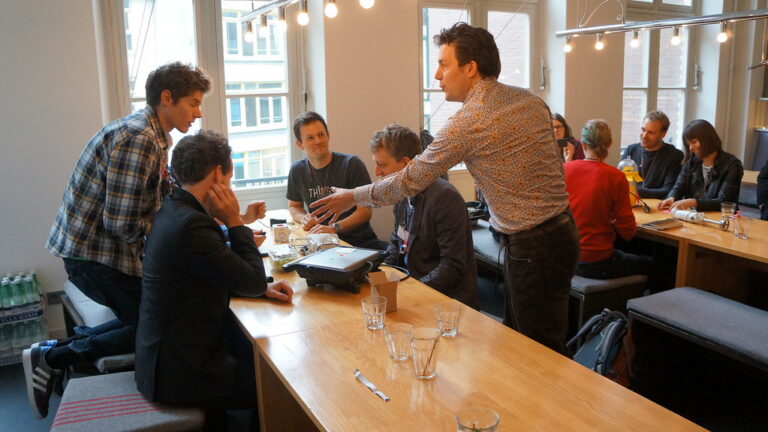
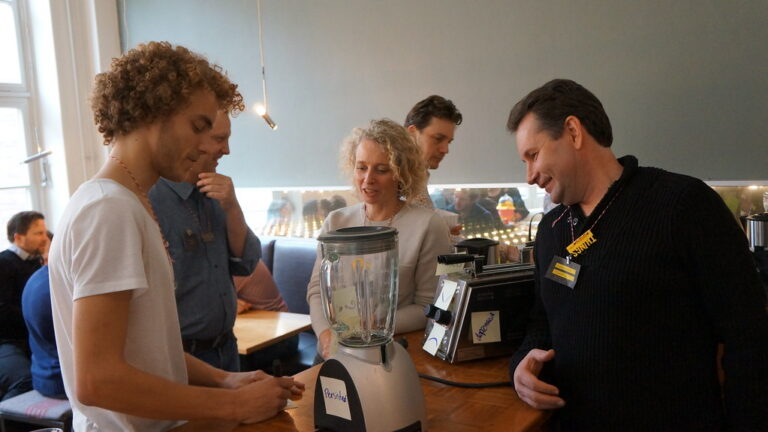
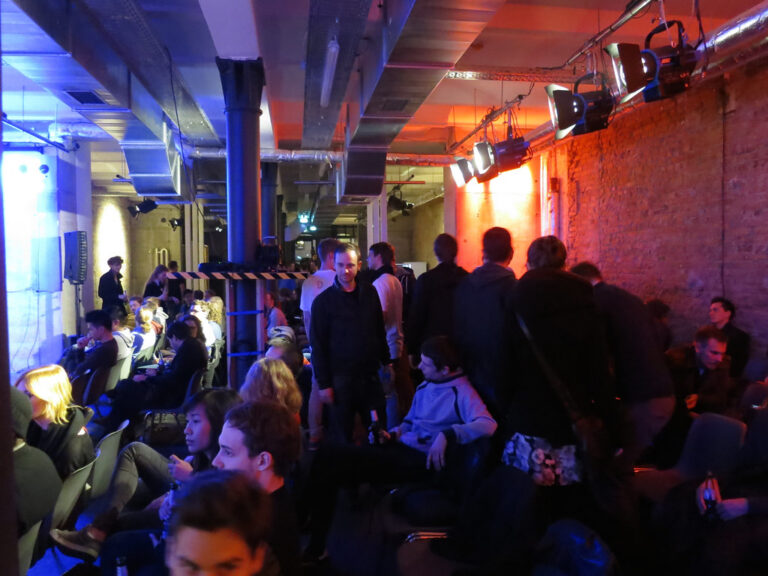
We wrapped up the week with two events. I participated in an event organised by Rezone on games for urban development. Alper, meanwhile, moderated a panel on smart cities at #lab4city. By all accounts he did a great job.
Very much enjoying @alper’s moderation of the 2nd panel at #labforcity. V direct, so lots of signal, not much noise. Bravo.
— Chris Adams (@mrchrisadams) November 21, 2014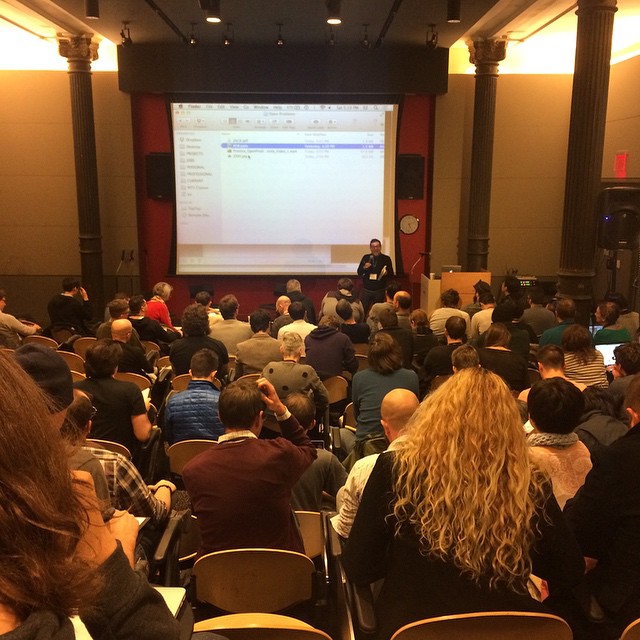

PRACTICE 2014 recap
This year’s PRACTICE, the game design conference at NYU Gamecenter, was as great as expected. It’s really nice to be surrounded by game designers for a couple of days and to be able to discuss game design in detail. As Frank Lantz put it in the introduction: “Game design is a sickness and the only cure is more game design.”
The overall level was great but here is a list of sessions that especially stood out for me. I would recommend checking out the recordings of these talks when they are up.
Holly Gramazio did an excellent overview of pervasive games, covering both its history and the myriad of games that she has created and facilitated. She divided pervasive games into three main categories: ‘the scavenger hunt’, ‘the blindfold game’ and ‘taking certain kind of pictures’ and highlighted problems with all of these, many of which were pretty familiar.
David Kanaga pled for a formalism that pushes things forward in a presentation that used the history of philosophy as a mind bomb. David’s writing has been a great inspiration for us and it was nice to see his meta-philosophy being presented in real life.
Samantha Kalman ran us through years of prototypes that finally led to Sentris. To see this development was illuminating from perspectives of game design, interface design and music theory. I don’t think there are professional or casual music apps that have a similar approach to accessibility and iterative development.
Lukas Litzsinger went over the reboot of Netrunner and the numerous design decisions that went into that. Netrunner is a studio favourite that is more or less compulsory for game designers to play. Hearing this talk when you’re in the process of producing a card game yourself was pretty intimidating.
Zach Gage gave a high-density talk using science about how to design games for problem solvers and how to turn people into better problem solvers. It boiled down to creating sandboxes for people to play in and be able to form their own models before being faced with problems. The slides are online already and I recommend working through them yourself.
These talks should prove a good taste of what PRACTICE was about. I’m already looking forward to next year’s event.