Hubbub has gone into hibernation.

Week 169

Last week start­ed out with a vis­it to the Utrecht Med­ical Cen­tre to dis­cuss a pos­si­ble new project. I was intro­duced to this by my younger broth­er Ties, who is one third of the infa­mous Pony Design Club, a graph­ic design stu­dio and also of Dufarge, whose appar­el I reg­u­lar­ly sport. Any­way, the project is about the med­ical cham­bers in the hos­pi­tal, and pos­si­ble changes around them. Games and play might be a way to facil­i­tate some of the adjust­ment required of the peo­ple using these spaces. We’ll see.

On Tues­day I had the plea­sure of shar­ing a desk at Top­i­ka, a design stu­dio found­ed by my one time This hap­pened cocon­spir­a­tor Alexan­der Zeh. The stu­dio is part of the Open Coop, which also used to be home to our prin­ci­pal tech­nol­o­gist Alper—and still is to the Open State Foun­da­tion, of which he is a board mem­ber. This is a spe­cial kind of cre­ative hub, one that is whol­ly owned by its inhab­i­tants. Hence the name coop, short for coop­er­a­tive. It’s an inspir­ing place. It shows what’s pos­si­ble when peo­ple throw in their lots togeth­er and for­go indi­vid­ual inter­ests. The shared lunch­es pre­pared by one of the atten­dant com­pa­nies is one case in point—you won’t find this in a reg­u­lar incu­ba­tor. The amaz­ing work being done around archi­tec­ture and urban plan­ning such as with the Kamer­mak­er—a mas­sive 3D print­er that will even­tu­al­ly print buildings—only sweet­ens the deal. Ams­ter­dam Noord as a whole, where the Open Coop is sit­u­at­ed, is an excit­ing place.

It was in this entourage that I got to spend a good few hours just work­ing through some designs for Vic­to­ry Boo­gie Woogie—which nice­ly off­set the pre­vi­ous week’s all talk­ing and no mak­ing.

On Wednes­day there was the month­ly Dutch Game Gar­den net­work­ing lunch. Also a pleas­ant few hours spent talk­ing with Bren­dan Dawes over cof­fee at The Vil­lage. And to top it off the TEDx­Utrecht speak­ers din­ner. Talk­ing, in oth­er words. But good, stim­u­lat­ing talk nonethe­less.

Then on Thurs­day, I attend­ed and spoke at TEDx­Utrecht. Could­n’t be much more pleased with how my own con­tri­bu­tion went. I’ll blog it as soon as pos­si­ble. The venue, great turnout, pleas­ant atmos­phere and good line­up all con­spired to make this a thor­ough­ly enjoy­able event. Utrecht does­n’t see enough of these high pro­file events, cer­tain­ly not ones that are pro­duced by a grass­roots team of folk well embed­ded in the local cre­ative scenes. This was a nice change.

To wrap up the week I vis­it­ed the UMC once more for a tour of a num­ber of med­ical chambers—a guer­ril­la field study of sorts. And I spent a few hours at Tin­ker, pre­sent­ing Hub­bub’s work, learn­ing about their prac­tice, and dis­cussing the over­laps between game design and exhi­bi­tion design, also with Sjo­erd of Monoban­da who had joined us.

Posted in Weeknotes | Tagged , , , , , , , , , , , , , , | Comments closed

Week 168

While Alper is still away in the Antipodes, and I am sent the occa­sion­al hol­i­day snap (or #instabrag?) through Insta­gram, work con­tin­ues to hap­pen in the Utrecht stu­dio. When I say work, it appears I most­ly mean meet­ings, because look­ing back that’s what last week main­ly con­sist­ed of. Let’s see:

I sat down with Irene and went over her TEDxBrus­sels talk about our work on Pig Chase. It includes new mate­r­i­al we’ll unveil for the first time at the event. I’m look­ing for­ward to see­ing how folks will respond to it.

I ran through my TEDx­Utrecht talk a few more times and tweaked it a bit. It’s become an incred­i­bly con­densed sum­ma­ry of our per­spec­tive on applied games. I guess I’m ready as I’ll ever be.

Will Evans was in Utrecht to run a Design Stu­dio work­shop on Mon­day. I decid­ed to skip the work­shop and just head to the drinks after. Which was good, as I got to catch up with NL’s num­ber one geek mom Mar­ri­je and the mighty Yohan. The next day I caught up with Will over cof­fee, where I had the plea­sure of get­ting a sneak pre­view of the talk he would give at the UX Cock­tail Hour that same night.

That evening, I vis­it­ed my for­mer employ­er Info.nl, chat­ted with some erst­while col­leagues and sub­se­quent­ly head­ed out to catch up with Iskan­der over din­ner.

On Wednes­day I briefly vis­it­ed Inno­va­tion Day to attend the Utrechtse Ster award cer­e­mo­ny. Pig Chase was nom­i­nat­ed but lost to Cristal Deliv­ery’s “con­trolled drug release tech­nol­o­gy” which involves clever nan­otech. A wor­thy oppo­nent and deserved vic­tor.

More award shenani­gans took place that same evening when the Dutch Game Awards nom­i­nees were announced. Beesten­bende did­n’t make the cut, which to be per­fect­ly hon­est is quite dis­ap­point­ing. We’ve real­ly tried to show that a dif­fer­ent, more open-end­ed approach with­in applied games is pos­si­ble. But sad­ly we did­n’t suc­ceed in con­vinc­ing the jury this is wor­thy of recog­ni­tion. Oh well.

I got to meet Anne and Zineb of Stu­dio Papaver and Chris Col­laris, who have been select­ed for the third edi­tion of the Stu­dio for Unso­licit­ed Archi­tec­ture. They’re work­ing on some inter­est­ing stuff deal­ing with pop­u­la­tion shrink­age, which requires a rad­i­cal dif­fer­ent per­spec­tive from plan­ners, one not focused on growth mea­sures, but qual­i­ta­tive mea­sures and the inten­si­fi­ca­tion of local net­works. As they are con­sid­er­ing a game-like we might offer them some assis­tance. We’ll have to see.

At the end of the week I wrote some copy for the upcom­ing Hub­bub web­site realign (stay tuned) and played anoth­er game of In a Wicked Age with a mot­ley crew of friends and asso­ciates. The game’s going from strength to strength as we unlearn some of our old style table­top RPG habits and real­ly use its sys­tem to tell balls-to-the-wall Conanesque sword and sor­cery sto­ries.

And with that, we’re all set for week 169.

Posted in Weeknotes | Tagged , , , , , , , , , , , , , , , , , | Comments closed

Week 166–167

I was away on hol­i­day the pre­vi­ous week, so these notes on the week pri­or to that are a bit late. I’ll keep it short so we can get back into the rhythm of things.

Most of the week my time went into admin­is­tra­tive things, busi­ness devel­op­ment and some legal stuff. Just basi­cal­ly me wear­ing my stu­dio man­ager’s hat a lot. Which is typ­i­cal of a week before clos­ing shop. The fact that Alper would be away on much deserved R&R in Oz for the next three weeks only increased the need for get­ting some things sort­ed.

On Mon­day, the Uni­ver­si­ty Muse­um pub­lished the press release for Beesten­bende (in Dutch). Since Octo­ber 12 you can head to the muse­um and play the game on one of the iPods avail­able at the recep­tion. I’m real­ly pleased to have this out in the world now.

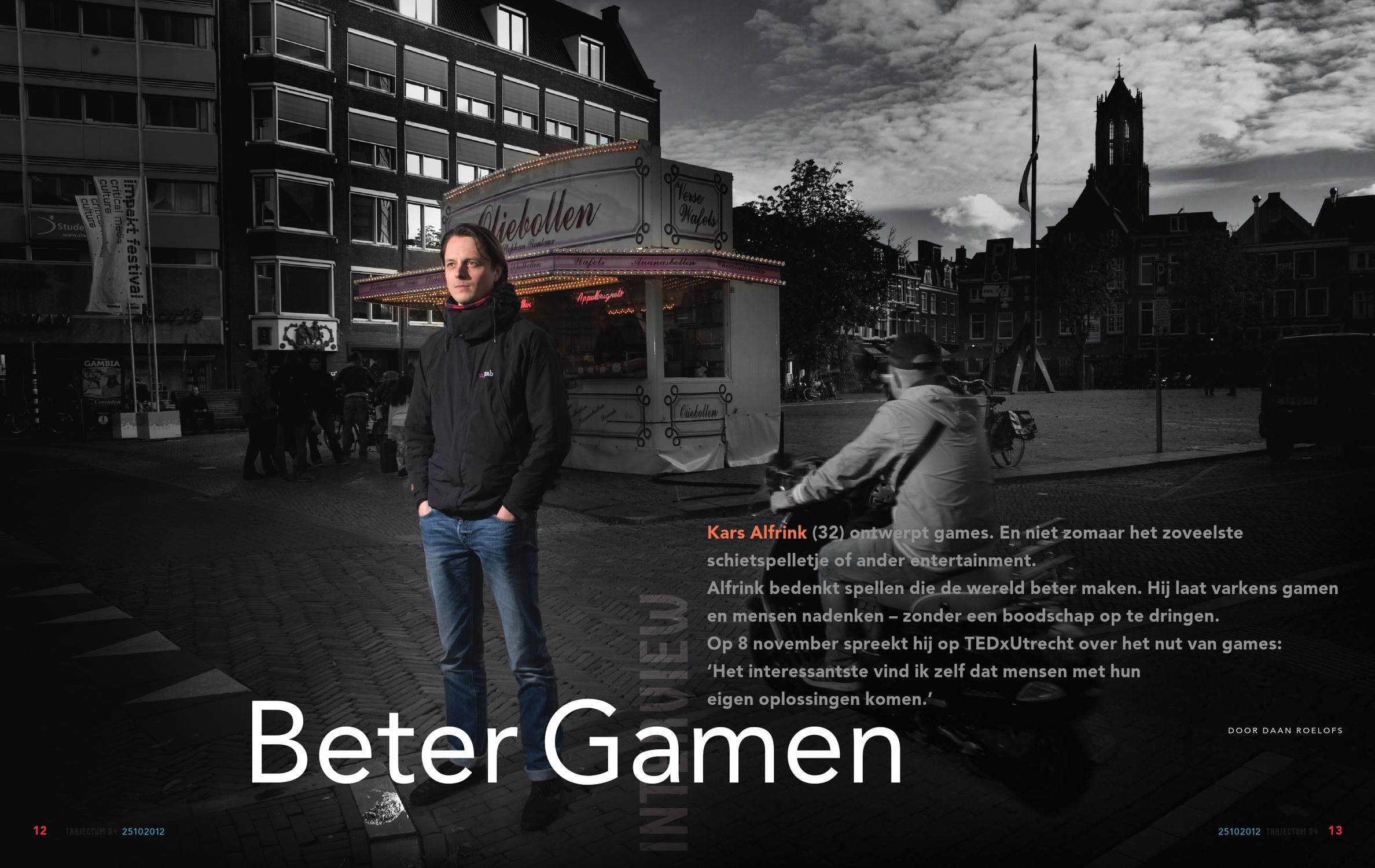
That same day I spent about an hour on the Neude being pho­tographed for the inter­view in Tra­jec­tum – the Utrecht Uni­ver­si­ty of Applied Sci­ence’s mag­a­zine. I don’t usu­al­ly enjoy these affairs but Kees Rut­ten made me stand in the mid­dle of bicy­cle traf­fic in the hopes of an inter­est­ing shot spon­ta­neous­ly emerg­ing. As you can imag­ine, that made it some­what more enjoy­able. The inter­view and accom­pa­ny­ing pho­to have since been pub­lished. It came out rather nice:

Beter Gamen – Trajectum 12/13 #04, opening spread (pages 12–13)
“Beter Gamen”, Tra­jec­tum (12/13) #04, 25 Octo­ber 2012, pages 12–15 (PDF, 1.3 MB). Inter­view by Daan Roelofs, pho­tos by Kees Rut­ten, © Tra­jec­tum, Hogeschool Utrecht.

On Tues­day I spent some more time on my TEDx­Utrecht talk. I final­ized the slides and start­ed rehears­ing. Less than two weeks to go. I’m look­ing for­ward to it.

On Thurs­day, I head­ed to Ams­ter­dam togeth­er with Simon and Ulla to attend De Gids’s 175th anniver­sary and wit­ness the unveil­ing of Vic­to­ry Boo­gie Woo­gie – the lit­er­ary game we’re mak­ing with them. Dirk Sr. & Dirk Jr. did a good job of piquing peo­ple’s curios­i­ty. They talked about some of the think­ing behind the project and of course could only go into the work­ing of the game in gen­er­al terms. The mock­ups pre­pared by Simon did a good job of giv­ing a sense of how the game might turn out:

IMG 1765

The same night in Berlin, Alper pre­sent­ed his syn­the­sis of two years of Hub­bub think­ing at Ignite. An enjoy­able romp through some big ideas, here’s the video:

Video by Peter Bihr / The Wav­ing Cat, orig­i­nal­ly on YouTube.

Posted in Weeknotes | Tagged , , , , , , , , | Comments closed

Week 165

My streak of talks con­tin­ued last week with a brief appear­ance on Mon­day at Play­ing City, an install­ment of City Think Lab, which has been chart­ing the var­i­ous ways of think­ing about cities over the course of the past year. I dis­cussed our gen­er­al approach for design­ing games for cities, and in par­tic­u­lar on what basis we choose cer­tain tech­nolo­gies. This allowed me to go off on a tan­gent towards the end of my 10 min­utes about tech­nol­o­gy as a mate­r­i­al, and ded­i­ca­tion to all aspects of game cre­ation, with Jiro Ono as my guid­ing arche­type.

On Tues­day I had the plea­sure of going over my TEDx­Utrecht talk with speak­ing coach Joni Bais. I have to admit I was a bit skep­ti­cal about what I might gain from the ses­sion. But Joni set me straight, with an hon­est attempt to gauge my per­son­al approach to the sub­ject and tai­lor her advice accord­ing­ly. Very refresh­ing.

Some writ­ings appeared here over the course of the week which might inter­est you: one, a write­up of Galaxy Tours, a design research project about class­room games for sci­ence edu­ca­tion and two, notes from chief tech­nol­o­gy agent Alper on the devel­op­ment of Beesten­bende.

The week was round­ed off with some work from myself and Simon on Vic­to­ry Boo­gie Woo­gie. Simon pol­ished the mock­ups we’ll show at De Gids anniver­sary gala this Thurs­day. I con­tin­ued to explore some game design direc­tions using Machi­na­tions.

And on Fri­day, I met with Tim Bosje to reflect on our run of Cer­e­mo­ny of Sur­prise at the Hide&Seek Week­ender and catch up over beers at De Bas­taard.

Posted in Weeknotes | Tagged , , , , , , , , , , , , , , , | Comments closed

Beestenbende technical wrap-up

I usu­al­ly tell peo­ple that devel­op­ing games is the most chal­leng­ing and also the most reward­ing dis­ci­pline in pro­gram­ming out there. You get to solve real­ly rather dif­fi­cult prob­lems with aston­ish­ing reg­u­lar­i­ty and every­thing you can squeeze out of the tech­ni­cal envi­ron­ment has a sig­nif­i­cant impact on the play­er expe­ri­ence.

That makes it a bit strange that we haven’t talked about the tech­ni­cal details of the stuff we’ve made here. That is going to change with this tech­ni­cal review of the game Beesten­bende we recent­ly made for the Uni­ver­si­ty Muse­um Utrecht.

From the project page:

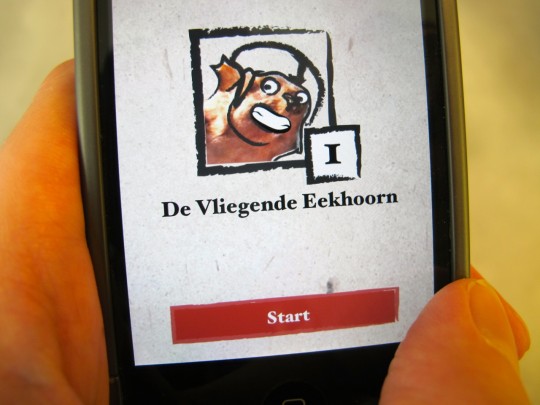
Beesten­bende is a game for fam­i­lies vis­it­ing the cab­i­net of curiosi­ties at Uni­ver­si­ty Muse­um Utrecht. Play­ers are invit­ed to look at the objects on dis­play through the eyes of sci­en­tists. In the game, a num­ber of ani­mals in the cab­i­net are con­fused about the ani­mal group they belong to.

From the onset it was rather clear that this should be a mobile game of some sorts that takes place in the muse­um, so off we go.

Phonegap

Ini­tial­ly, because I had hard­ly any expe­ri­ence devel­op­ing for iOS I tried set­ting up this project in Phone­Gap. The promise of being able to use my exist­ing web devel­op­ment skills to cre­ate an app and then be able to deploy it to mul­ti­ple plat­forms was very appeal­ing.

After a cou­ple of days this turned out to be a dead end. Even in the basic game engine I set up, where some screens tran­si­tioned into each oth­er, per­for­mance was dis­as­trous. Attempts at throw­ing opti­miza­tions at that prob­lem did not show much progress. Addi­tion­al­ly Phone­Gap doc­u­men­ta­tion was not very help­ful and tool­ing to debug these issues near­ly non-exis­tant. So rather quick­ly we made the switch to native iOS devel­op­ment for this project.

In ret­ro­spect see­ing how far we took the project, how much con­tent even­tu­al­ly went in there and how much pol­ish we want­ed to apply, I think the attempt to do it with­out native code was mis­guid­ed in the first place. But even for sim­ple apps the thresh­old to go native is not that high. Pro­gram­ming in Objec­tive C is not much more dif­fi­cult than JavaScript with the recent addi­tion of sto­ry­boards and ARC. In fact for those with a more for­mal pro­gram­ming back­ground in either Java or C#, Objec­tive C’s clean object mod­el with its del­e­gates and prop­er­ties may be more appeal­ing.

This was my first iOS project but I found a bunch of API knowl­edge along with ample use of Stack Over­flow to be more than enough to start build­ing with con­fi­dence.

Storyboards

We heav­i­ly used sto­ry­boards in mak­ing this app. How heav­i­ly you can see in this screen­shot (click through for the entire thing):

Beestenbende storyboard detail

Work­ing with sto­ry­boards is real­ly excel­lent and some­thing lack­ing in most inte­grat­ed devel­op­ment envi­ron­ments. They work equal­ly well if you want to quick­ly pro­to­type some­thing or if you want to real­ly go for a pix­el per­fect design. Inter­ac­tion design­ers cas use a sto­ry­board with Nav­i­ga­tion­Con­trollers to quick­ly pull togeth­er the basic flows and con­trols of an app. But they also enable you to fine tune the final 10% of your app.

What proved espe­cial­ly use­ful is the fact that non-pro­gram­mers can eas­i­ly make deep changes to the user inter­face with­out break­ing code. Cre­at­ing new screens or tweak­ing exist­ing views and assets proved to be very easy and source con­trol con­flicts that did turn up reg­u­lar­ly (MainStoryboard.storyboard could have been a bit less mono­lith­ic) were eas­i­ly resolved.

I would say that seri­ous web devel­op­ment needs some­thing equiv­a­lent to a sto­ry­board edi­tor very des­per­ate­ly. I know the par­a­digms are dif­fer­ent, but that is not the point. The main point is that an envi­ron­ment where devel­op­ers and non-devel­op­ers can com­fort­ably work togeth­er with­out inte­gra­tion prob­lems is the future.

Camera

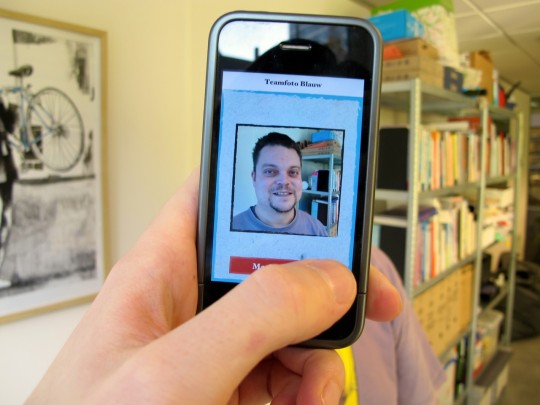
The default cam­era con­trol in the iPhone works well but its intro­duc­tion of a new mode is jar­ring and unnec­es­sary. We saw the pos­si­bil­i­ty to use AVFoun­da­tion based video with­in an exist­ing view (as seen in for instance Grid Lens) and we went for that. It did prove to be a bit finicky to get right but over­all the vast­ly supe­ri­or user expe­ri­ence was more than worth it.

Rik modeling the game's photo team photo mode

Rik mod­el­ing the game’s pho­to team pho­to mode

Fonts

We had quite some issues with enabling cus­tom fonts on the iPhone. The ones that we orig­i­nal­ly want­ed to use had a mis­set ascen­der. Cor­rect­ing the font met­rics using a tool (see this Stack Over­flow answer) then caused oth­er prob­lems down the road which made us even­tu­al­ly go back to one of the fonts includ­ed on the iPhone.

The custom typeface we use for titles and buttons

The cus­tom type­face we use for titles and but­tons

If you want to set cus­tom fonts in the sto­ry­board edi­tor a sim­ple trick to do that is to cre­ate a cus­tom class (for instance Cus­tom­La­bel) which changes its own font. Then in the sto­ry­board any label you want to have that spe­cial font you can assign that class in the iden­ti­ty inspec­tor. The cus­tomiza­tion does not need to be lim­it­ed to the fonts but can be any­thing. We used this method to cre­ate uni­form mas­ter styles for the var­i­ous labels, but­tons and oth­er views that we were using in the app.

Sounds

We added sounds rel­a­tive­ly late in the game but it can­not be over­stat­ed how much of a dif­fer­ence they make to a game. We can say that the sound effects pro­vid­ed by Rik Nieuw­dorp from Claynote real­ly made the game come to life.

Besides need­ing sound effects for the actions one can per­form in the game, we need­ed voic­es for the var­i­ous char­ac­ters and tunes for some of the intro­duc­tion and sum­ma­ry screens. Rik did an excel­lent job on what was prob­a­bly not the most straight-for­ward brief.

The game is host­ed by the Nau­tilus who sounds like:

Then we start off with a squir­rel who thinks it’s a bird and sounds like:

Next there’s the eel that is sad because it thinks it’s a snake:

And final­ly you can get a hint of the drag­on who is serves as our boss:

And all in between there are tran­si­tions such as:

I used Cocos2D’s excel­lent Cocos­Den­sh­ion sound library for the audio play­back which is a sim­ple drop-in and very easy to use.

Polish

Final­ly to talk about pol­ish­ing a mobile app: what starts out as a small project quick­ly bal­loons into some­thing rather daunt­ing. Being able to con­trol the entire user expe­ri­ence car­ries with it the respon­si­bil­i­ty to ensure that it is a good expe­ri­ence, but that takes an enor­mous amount of time.

But all in all mak­ing a game like this is very reward­ing, espe­cial­ly if you see the fam­i­lies in the muse­um play­ing it.

Posted in Projects | Tagged , , , , , , , | Comments closed

Week 164

At the start of last week, I pre­pared for and deliv­ered a num­ber of pre­sen­ta­tions at TFI’s inspi­ra­tion day about games & her­itage. The first was a short case as part of a ses­sion lead by Valen­ti­jn Byvanck, about ways in which games might enrich a hypo­thet­i­cal car muse­um. This ses­sion was aimed at iden­ti­fy­ing oppor­tu­ni­ties as well as chal­lenges around bring­ing the worlds of her­itage and games togeth­er. I also did a brief port­fo­lio pre­sen­ta­tion, to show­case Hub­bub’s work and vision. Final­ly, togeth­er with Aniek Bax of the Uni­ver­si­ty Muse­um Utrecht I shared lessons learned from our work on Beesten­bende. Which lead to live­ly dis­cus­sions with the peo­ple in the room about such things as: what is the best way to con­nect an exhib­it and a game? To what extent do we still need pub­licly fund­ed projects in this space, and so on.

Speak­ing of Beesten­bende, the game is fin­ished although not yet avail­able on the App Store. We have pub­lished a project write­up, which includes a short pro­mo­tion­al video. I think it pro­vides a good sense of what peo­ple actu­al­ly do when play­ing, in stead of what hap­pens on the screen, which real­ly isn’t the point of a game like this.1

Beesten­bende from Hub­bub on Vimeo.

I’ve also pub­lished the write­up of my talk at the Hide&Seek Week­ender Con­fer­ence. It’s about pub­lic play and the weird. I enjoyed putting this togeth­er, and the thoughts are very much still in devel­op­ment. I hope it’s of some use to oth­ers and wel­come any thoughts or com­ments it might spark.

Work con­tin­ues on the SAKE front. Alper has start­ed set­ting up a first dig­i­tal pro­to­type. Simon is sketch­ing out screens, some of which we’ll show at the Gid­s’s anniver­sary in a few weeks. In the mean­time, I con­tin­ue to fid­dle with the game design. I have a rea­son­ably sta­ble set of fea­tures for a first release but hope to be able to iter­ate on those once we’ve played through them with a select group.

I end­ed the week in the trusty old Bas­taard, drink­ing a few beers with Monoban­da who have just launched their lat­est project, a gor­geous respon­sive audio­vi­su­al expe­ri­ence lay­ered on top of a 1000-year old ship on dis­play in Utrecht’s Cen­tral Muse­um.

  1. We’re work­ing to get it trans­lat­ed into Eng­lish, I’ll let you know when we do. [↩]
Posted in Weeknotes | Tagged , , , , , , , , , , , , | Comments closed

‘The Strange Things People Play’ at the Hide&Seek Weekender Conference

Here’s the blog post ver­sion of what I talked about at Play­ing in Pub­lic, the Hide&Seek Week­ender Con­fer­ence. It’s titled The Strange Things Peo­ple Play, which was an oblique ref­er­ence to this pas­sage from The Hitch­hik­er’s Guide to the Galaxy:

“I know that astrol­o­gy isn’t a sci­ence,” said Gail. “Of course it isn’t. It’s just an arbi­trary set of rules like chess or ten­nis or—what’s that strange thing you British play?” “Er, crick­et? Self-loathing?” “Par­lia­men­tary democ­ra­cy. The rules just kind of got there. They don’t make any kind of sense except in terms of them­selves. But when you start to exer­cise those rules, all sorts of process­es start to hap­pen and you start to find out all sorts of stuff about peo­ple. In astrol­o­gy the rules hap­pen to be about stars and plan­ets, but they could be about ducks and drakes for all the dif­fer­ence it would make. It’s just a way of think­ing about a prob­lem which lets the shape of that prob­lem begin to emerge. The more rules, the tinier the rules, the more arbi­trary they are, the bet­ter. It’s like throw­ing a hand­ful of fine graphite dust on a piece of paper to see where the hid­den inden­ta­tions are. It lets you see the words that were writ­ten on the piece of paper above it that’s now been tak­en away and hid­den. The graphite’s not impor­tant. It’s just the means of reveal­ing their inden­ta­tions. So you see, astrology’s noth­ing to do with astron­o­my. It’s just to do with peo­ple think­ing about peo­ple.

I enjoyed that when read­ing it the first time because it’s such a sharp obser­va­tion of how games func­tion on one lev­el: as a way of zoom­ing on cer­tain aspects of human behav­ior. As a mod­el for how games can con­tribute to social change, it isn’t half bad.

But that was­n’t what I real­ly talked about. The con­fer­ence was the cul­mi­na­tion of three days of peo­ple play­ing all kinds of games at the South­bank Cen­tre. We had the plea­sure of run­ning Cer­e­mo­ny of Sur­prise as part of this. The con­fer­ence focused on what’s next for play in pub­lic space. I decid­ed to mash up some of the ideas I had come across recent­ly, about leg­i­bil­i­ty and the weird­ness of objects for instance, and see where it would take me.

I start out briefly respond­ing to some of the recent debates about how it’s wrong to defend games as an art form on the basis of their use­ful­ness. I then go on to sug­gest it’s impor­tant we keep devel­op­ing new pub­lic games, and that weird­ness might be a use­ful cri­te­ri­on for find­ing nascent forms of pub­lic play.

In defense of usefulness

I keep get­ting drawn into the seem­ing dichoto­my that exists between applied games, and for lack of a bet­ter word, use­less games: enter­tain­ment games, art games, etc. What fol­lows is yet anoth­er attempt to alle­vi­ate my anx­i­eties about the top­ic. And in doing so, hope­ful­ly point towards some new avenues of explo­ration for future pub­lic games.

Recent­ly, in some cir­cles, there have been argu­ments made against the urge to defend games on the basis of their “use­ful­ness”. It is said that oth­er cul­tur­al forms, such as music and visu­al art aren’t respect­ed for their use­ful­ness. They’re valid forms of expres­sion and that’s enough. The same should apply to games. I agree.

But then the argu­ment is often con­tin­ued with the sug­ges­tion that by attempt­ing to use games for what I’ll call exter­nal pur­pos­es, the cul­tur­al form of games is “cheap­ened”. And that’s the point where I begin to feel uneasy. Under­stand­ably so, because my whole prac­tice is based on the premise that we can make games that work towards solv­ing social issues.

Now I total­ly get that many applied games, or game-like appli­ca­tions are in fact noth­ing more than an attempt to uti­lize play for oth­er ends. I’m not so cool with this myself. I’d like to think that the games Hub­bub makes, and oth­er applied game design­ers that I admire, are respect­ful of the medi­um. They can be played as games first and also have cer­tain kinds of sec­ond order effects that are of val­ue to soci­ety in var­i­ous ways. And I think that’s great. And I don’t think that cheap­ens games.

As an aside, I would like to add that, as some­one with a back­ground in design, I am actu­al­ly puz­zled by this idea that the use of a cul­tur­al form for oth­er ends by def­i­n­i­tion cheap­ens it. Is a doc­u­men­tary film with an agen­da a cheap­en­ing of cin­e­ma? Does graph­ic design, this poster designed by Wim Crouwel for instance, cheap­en visu­al art?

Strange things people play hide and seek weekender conference 2012 007

Anoth­er way I’d like to think about this is inspired by Alain de Botton’s won­der­ful book The Archi­tec­ture of Hap­pi­ness, in which he con­vinc­ing­ly describes how the esthet­ics of archi­tec­ture, the non-use­ful stuff, beyond pro­vid­ing shel­ter, is what we use to remind our­selves of the val­ues we hold high­est. The built envi­ron­ment reminds us of how we’d like to lead our lives. What we deem beau­ti­ful is close­ly relat­ed to our visions of hap­pi­ness.

The same can apply to urban games. Urban games can be reminders of the ways we’d like to live. In par­tic­u­lar, the ways in which we’d like to live togeth­er. I can ref­er­ence no bet­ter exam­ple than the work of Bernie DeKoven, and the New Games move­ment as a whole.

Games should get weird

With that out of the way, let’s turn our atten­tion to pub­lic play. The ques­tion is where game design for pub­lic places might be head­ed in the future. Or per­haps, where should it be head­ed? I’ll try to argue that our games will get weird.

I mean weird in a sim­i­lar sense to weird fic­tion. You know, the kind of stuff H.P. Love­craft used to write at the begin­ning of the pre­vi­ous cen­tu­ry. Intel­lec­tu­als hap­haz­ard­ly stum­bling across hid­den secrets of the cos­mos and going stark rav­ing mad in the process.1

This, I think is an inter­est­ing mod­el for how we deal with the future. We under­stand new stuff in terms of the old. The new is only made part of soci­ety when it allows itself to be domes­ti­cat­ed in this way. Every­thing else is kept at bay. If we stum­ble across these undo­mes­ti­cat­ed future things with­out the metaphors to under­stand them, the expe­ri­ence is quite unpleas­ant and we quick­ly with­draw.2

What’s also inter­est­ing about H.P. Lovecraft’s work is that it pre­dates com­mer­cial genre fic­tion: hor­ror and sci­ence fic­tion and fan­ta­sy. It was kind of an undo­mes­ti­cat­ed, wild form of sto­ry­telling. At some point, parts of it were adopt­ed by the main­stream, neat­ly parceled out into genre. In the process much of its head spin­ning poten­cy was lost, but it gained in use­ful­ness to insti­tu­tions, in this case book sell­ers.

Strange things people play hide and seek weekender conference 2012 013

In search of new forms of play

I think this notion of the weird can be used by design­ers of pub­lic play as a way to grasp and grope towards inter­est­ing new forms.

For one, I say this because what was once a wild and undo­mes­ti­cat­ed, avant garde form, the urban per­va­sive game, has to a large extent been tamed. We’ve more or less fig­ured them out. And also, the spaces we’ve cre­at­ed them for have fig­ured them out. Our cities have fig­ured them out. The lud­i­fi­ca­tion of cul­ture can also be seen as a domes­ti­ca­tion of play.

This has made our games more use­ful for insti­tu­tions, who pre­fer their cul­tur­al forms to be leg­i­ble. The gam­bling indus­try is a won­der­ful and per­haps dis­turb­ing exam­ple of play har­nessed by the state. But as machines for under­stand­ing our future cities, they have become less use­ful.

Strange things people play hide and seek weekender conference 2012 016

The future of our cities is weird. And the metaphors we have so far used to under­stand our cities do not suf­fice when it comes to these new cities. New megac­i­ties like Shen­zhen and oth­er places in Asia, Africa and Latin Amer­i­ca are noth­ing like the Man­hat­tan or the Euro­pean cities that served as ref­er­ence points for Jane Jacobs and com­pa­ny.

Schizophrenic Shenzhen

Longhua Sci­ence & Tech­nol­o­gy Park is Foxconn’s facil­i­ty in Shen­zhen. It is a citadel with­in a mega­lopo­lis of 14 mil­lion inhab­i­tants. The facil­i­ty has 420.000 employ­ees, most of whom live in com­pa­ny owned dor­mi­to­ries. They trav­el to the facil­i­ty on cor­po­rate busses. The streets, build­ings and infra­struc­ture are all com­pa­ny owned.3

David Kouse­mak­er reports from anoth­er part of Shen­zhen. He describes peo­ple recy­cling old mobile phones and build­ing new ones from the parts they painstak­ing­ly sal­vage. In a mas­sive mar­ket, small shops each spe­cial­ize in a few tasks. Togeth­er, these peo­ple assem­ble weird mutant off­spring of the high tech gad­gets that most of us real­ly only under­stand as shiny box­es you talk into and poke at. The rela­tion­ships these Shen­zhen inhab­i­tants as well as the Fox­conn employ­ees have with this tech is com­plete­ly alien to us.

Strange things people play hide and seek weekender conference 2012 019

Life here is noth­ing like in our West­ern cities. It is char­ac­ter­ized by “a schizoid mix of glob­al cap­i­tal­ism and hard­line Com­mu­nism.“4 Jane Jacobs’s Man­hat­tanist metaphors sim­ply don’t apply any­more.

Metaphorism

That’s impor­tant because pub­lic games are often a form of metapho­rism. That is to say, they invite us to under­stand an essen­tial­ly unknow­able thing, a city, in terms of some­thing else. But when cities have rad­i­cal­ly changed, then we need new metaphors to under­stand them.5

Anoth­er aside: this why Matt Jones’s post The City Is A Bat­tle­suit For Sur­viv­ing The Future is so inter­est­ing. Because it pro­pos­es a new metaphor. Grant­ed, a rather mil­i­taris­tic one, but nonethe­less, a new one. It would be an inter­est­ing exer­cise to design games that allow you to explore the city-as-bat­tle­suit metaphor.

Strange things people play hide and seek weekender conference 2012 022

It’s kind of com­pli­cat­ed because the issue isn’t so much with Jacobs’s stance that cities are com­plex, emer­gent forms and as such they thrive when they are dense­ly inter­con­nect­ed. And this whole idea that high-mod­ernist plan­ning tech­niques, attempts to make the city tidi­er, more leg­i­ble from the top-down actu­al­ly make a city less resilient, more brit­tle. This idea still holds.

But the fact is, the way cities are com­ing into being, or devel­op beyond the point of Jacobs’s Man­hat­tanist opti­mal state, is noth­ing like her beloved Green­wich Vil­lage, or my home­town Utrecht, which I so dear­ly love for its enor­mous liv­abil­i­ty. Cities thrive on the edge of leg­i­bil­i­ty. It’s a stand­ing wave. We can’t expect them to stay the way they are.6

So to restate my pre­vi­ous point, the Man­hat­tanist metaphors we’ve used for our cities do not apply to the new ones. But it’s the new ones we’ll find our­selves liv­ing in, and we’ll find our­selves design­ing for. We need new games for these new cities, that pro­pose new metaphors. The ques­tion is, how to get to these new forms. And that’s where the weird comes in.

The hunt begins

My invi­ta­tion is to start hunt­ing for wild undo­mes­ti­cat­ed forms of play as inspi­ra­tion for new weird games. I’ll give a few exam­ples to kick things off.

When the stu­pe­fy­ing­ly large Shard is offi­cial­ly unveiled, pro­fes­sion­al trou­ble­mak­er James Bri­dle plays a prank. It res­onates with us because it gives us a metaphor for under­stand­ing this weird thing that should not be. It is also heart­en­ing to see one indi­vid­ual co opt a mas­sive media event with noth­ing more than a sim­ple plac­ard.

Strange things people play hide and seek weekender conference 2012 027

In Jakar­ta, where the occur­rence of total grid­lock seems immi­nent, urban inter­ven­tion­ists Irwan Ahmett and Tita Sali­na ral­ly locals to jog with them along the poles of the failed mono­rail. It is a humor­ous deflec­tion of what is essen­tial­ly very unset­tling evi­dence of a city strug­gling to stay func­tion­al.

Back home in the Nether­lands, artist Sarah van Sons­beeck high­lights the hertz­ian spaces sur­round­ing us by mak­ing an object that fre­quent­ly fig­ures in sci­ence fic­tion a real­i­ty: a fara­day bag.

Strange things people play hide and seek weekender conference 2012 029

Cyborg activist Steve Mann is assault­ed by McDon­alds employ­ees in Paris because he won’t remove his sousveil­lane array. Mann high­lights the peer dis­tri­b­u­tion in our per­va­sive­ly sur­veilled soci­ety by instru­ment­ing his indi­vid­ual capac­i­ties to do the same thing the state does all the time.

In Venice, Julian Char­rière and Julius von Bis­mar­ck paint pigeons to make them appear more desir­able, in stead of the fly­ing rats they are usu­al­ly made out to be. The out­rage on the net high­lights our con­flict­ed rela­tion­ship with these ani­mals: is it harm­ful to do this? Does it pre­vent them from evad­ing preda­tors or find­ing a mate for instance? Also, is it eth­i­cal to seek fame at the expense of these ani­mals? And I won­der, how long before urban design pro­gress­es to include urban life­forms?

Strange things people play hide and seek weekender conference 2012 031

Hojun Song is build­ing his own satel­lite and work­ing to get it shot into space. By doing this he shows what a pri­vate indi­vid­ual can now achieve with open infor­ma­tion and ubiq­ui­tous social net­works.

Unfold, a design col­lec­tive from Bel­gium deployed Kiosk at the Milan Fur­ni­ture Fair. It’s a mobile fab­ri­ca­tion facil­i­ty that scans and prints con­sumer prod­ucts. Their aim was to con­front prod­uct design­ers with the immi­nent democ­ra­ti­za­tion of fab­ri­ca­tion tools.

Strange things people play hide and seek weekender conference 2012 033

And final­ly from my own prac­tice: a game for pigs and humans. We reg­u­lar­ly con­sume these ani­mals, but hard­ly ever meet them in the flesh. This in itself is a result of how we’ve sep­a­rat­ed rur­al and urban areas. In this project we’re try­ing to cre­ate a new rec­i­p­ro­cal under­stand­ing, through play. Might this lead to new pat­terns of behav­ior?

Strange things people play hide and seek weekender conference 2012 035

In my eyes, these are all play­ful acts. And all of them are wild, undo­mes­ti­cat­ed, illeg­i­ble. The play­ers in these cas­es focus on var­i­ous unset­tling things of city life.

They are weak sig­nals per­haps, but sig­nals nonethe­less. They point to ways in which we can hunt for wild forms of play: start­ing from those mate­ri­als, those objects, actors of var­i­ous kinds and spaces, that unset­tle us. And then draw out the unset­tling aspects, frame them, so that we can under­stand them. Per­haps not direct­ly, but in terms of some­thing else.

The irony is of course that by doing so, by turn­ing wild play into games, we are domes­ti­cat­ing it. But then, we can always go out hunt­ing again.
  1. Part of the inspi­ra­tion to use Love­craft as a start­ing point for new direc­tions for design was inspired by Gra­ham Har­man’s On the Hor­ror of Phe­nom­e­nol­o­gy in Col­lapse IV. [↩]
  2. This mod­el for futur­ism is heav­i­ly inspired by Venkatesh Rao’s writ­ing, in par­tic­u­lar Wel­come to the Future Nau­seous. [↩]
  3. For this pas­sage and the obser­va­tions on the obso­les­cence of some of Jane Jacob­s’s ideas in the face of new cities such as Shen­zhen I am indebt­ed to the excel­lent Kos­mo­grad arti­cle The Bal­let of iPod City. [↩]
  4. From the afore­men­tioned Kos­mo­grad arti­cle again. [↩]
  5. For more on met apho­rism, read Ian Bogost’s Alien Phe­nom­e­nol­o­gy, in par­tic­u­lar chap­ter three. [↩]
  6. For more on this, also see The Death of Man­hat­tanism at Domus. [↩]
Posted in Talks | Tagged , , , , , , , , , , , , , , , | Comments closed

Week 163

It’s already Wednes­day so let me quick­ly share with you some of the things that hap­pened last week.

On Tues­day I jumped in a Green­wheels and did a lit­tle tour of the Nether­lands. First stop was Apel­doorn for a talk about how we made Code 4. This was part of the annu­al Week of Inspi­ra­tion, orga­nized by the Dutch Tax Admin­is­tra­tion for its employ­ees.

After which I drove down to Tilburg for a reprise of the talk I did on Kop­pelkiek at Social Cities of Tomor­row, on invi­ta­tion of CAST. This event was called City, Play & Dig­i­tal Media. The audi­ence was most­ly archi­tects, urban plan­ners and pol­i­cy mak­ers.

And then I head­ed back home, with around 270 kilo­me­ters behind me.

On Wednes­day I spent some time with Simon to dis­cuss the first few screens of Vic­to­ry Boo­gie Woo­gie he’ll be sketch­ing out for a sneak pre­view at the Gid­s’s 175th anniver­sary event, lat­er this month.

And on Thurs­day, we met a major mile­stone for Pig Chase, with the instal­la­tion of a playable pro­to­type at a farm. Final­ly being able to remote­ly play around with pigs was quite the thrill.

NewImage

On Fri­day I sketched out an idea for a pre­sen­ta­tion at TFI’s event on Games & Her­itage, which would take place the fol­low­ing week. I start­ed from a hypo­thet­i­cal car muse­um and worked out a sce­nario about remix­ing cars and get­ting a 3D-print­ed result as a sou­venir.

I end­ed the week with anoth­er talk, a repeat of my Per­va­sive Games 101 talk (but this time in Eng­lish) at /dev/haag. On my way back home, I dropped by the open­ing of Indi­go, where I got to play some fun and inter­est­ing new Dutch games.

Posted in Weeknotes | Tagged , , , , , , , | Comments closed

Week 162

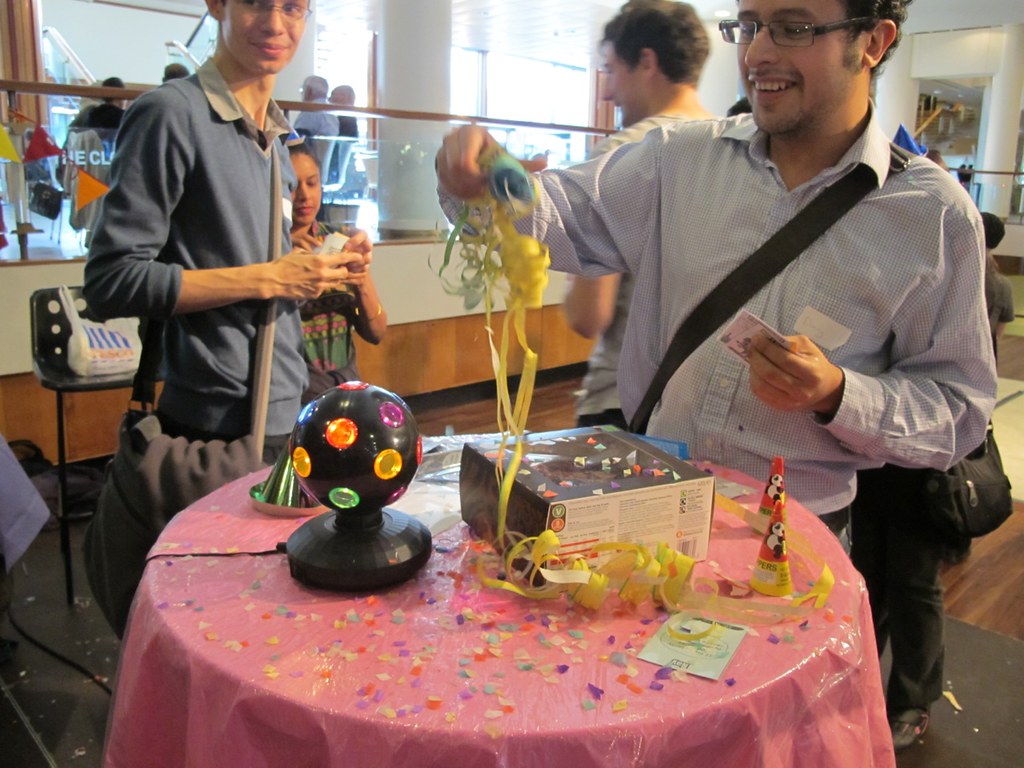
After last week’s mega-wee­knotes I’ll keep these short. Not in the least because they effec­tive­ly cov­er two, maybe three days, if I include Sat­ur­day.

To start with the lat­ter: I hand­ed the stu­dents that I have been coach­ing the past half year at the Utrecht School of the Arts their MA degrees. There were short speech­es and proud par­ents, and lots of excel­lent work on dis­play at the grad­u­ate exhi­bi­tion. I am now going to take a break from teach­ing, but I am sure I will return to it soon enough.

On Thurs­day I met with Jeroen van Mas­trigt, Valen­ti­jn Byvanck, Tem­peest and Monoban­da to pre­pare for our ses­sion at an event on her­itage and games, which will hap­pen next week on Tues­day. We talked about the ill-fat­ed Muse­um of Nation­al His­to­ry, of which Valen­ti­jn was one of the ini­tia­tors, and the ideas they had devel­oped there around his­tor­i­cal edu­ca­tion and play.

And on Fri­day, I sat down with Joris Dor­mans for a crash-course in his fas­ci­nat­ing Machi­na­tions tool. We used the oppor­tu­ni­ty to explore some of the design issues I’ve been hav­ing with Sake. In two hours, we’d worked through some poten­tial solu­tions and had found some promis­ing new approach­es. Sake is an online game with a play­er base of unpre­dictable scale. Machi­na­tions allowed us to run many quick sim­u­la­tions of the impact that vary­ing amounts of play­ers might have on the game’s core mechan­ics. I’d rec­om­mend pick­ing up the book Joris has writ­ten on the sub­ject togeth­er with Ernest Adams and div­ing in.
Posted in Weeknotes | Tagged , , , , , , , , , , , | Comments closed

Week 161

Week one-hun­dred-six­ty-one was a long one. It effec­tive­ly ran from Mon­day to Mon­day. I caught my breath yes­ter­day and am back in the sad­dle now. Let’s see what hap­pened.

Kohi sketching, Sake playtesting & Saba filming

It all start­ed a bit sub opti­mal with myself being a bit under the weath­er. How­ev­er, there was a sig­nif­i­cant amount of prepa­ra­tion ahead of me for the Hide&Seek Week­ender, so I sol­diered on.
On Mon­day I did some sketch­ing for KOHI, so that Alper could con­tin­ue to build and Simon could get start­ed on the graph­ic design. The result was a larg­er stack of sketch­es than I had expect­ed so they’ve got their work cut our for them.
7963282220 4eb7cb8c01 o

I worked on prepar­ing my Hide&Seek lec­ture. Wrote an out­line, got some feed­back on it from Alper and also from Alex which was all encour­ag­ing.

On Tues­day I head­ed to Ams­ter­dam for anoth­er SAKE meet­ing with the Gids edi­tors. I brought a paper pro­to­type and had them play through it with some fun and inter­est­ing results. The first mechan­ics seem to work but they do need some com­ple­men­tary ones to pre­vent the whole thing from spi­ral­ing out of con­trol.

NewImage

After the playtest we met with writ­ers who had expressed inter­est in par­tic­i­pat­ing. We ran through our plans and answered their ques­tions. A num­ber have since com­mit­ted to the project, so that’s encour­ag­ing. Our crew is almost com­plete.

On Wednes­day I head­ed to the Uni­ver­siteitsmu­se­um to assist Stef with the Beesten­bende (SABA) pro­mo­tion­al video shoot. We had three love­ly fam­i­lies who played part of the game as we fol­lowed them, and answered some ques­tions on cam­era. That should give us enough mate­r­i­al to cut togeth­er a nice short clip that will hope­ful­ly con­vince lots of fam­i­lies to come and play.

I should also men­tion we’ve sub­mit­ted Beesten­bende for a Dutch Game Award in the cat­e­go­ry best seri­ous game. I think we’ve done some­thing spe­cial in the games-for-muse­ums space and I hope it will be rec­og­nized by what is the most impor­tant indus­try award of the Nether­lands.

Hide&Seek Weekender

The rest of my time before fly­ing to Lon­don on Fri­day was tak­en up with prepa­ra­tions for Cer­e­mo­ny of Sur­prise. Print­ing and cut­ting cards, mak­ing hand­outs, and keep­ing in touch with Tim as he ran around the city pur­chas­ing the last of our par­ty items.

NewImage

Once we’d arrived on Fri­day after­noon I killed a few hours in our hotel room mak­ing slides as Tim explored Lon­don. In the evening we head­ed to the South­bank Cen­tre for the first evening of the Hide&Seek Week­ender. Games I played includ­ed Dis­co­tect, Ord­nungswis­senschaft and Search­light. We end­ed the day eat­ing a bur­ri­to from Waha­ca and hav­ing a real ale at the Harp.

On Sat­ur­day I fin­ished my slides as Tim went out hunt­ing for cake. In the after­noon we played more games at the Week­ender — Killer Queen was a high­light for me — and sat in the sun eat­ing var­i­ous tasty dish­es pro­cured from the Real Food Mar­ket. We killed anoth­er hour or two play­ing a game of new Netrun­ner in a qui­et cor­ner of the South­bank Cen­tre, which Tim had brought to try out.

7988987931 dbe4df6d38 o

In the evening we played more games at the Hide&Seek par­ty, includ­ing the mind-bend­ing Who Took The Apple?, the chaot­ic Do Move Say and the awk­ward Sword­fight. I also enjoyed catch­ing up with var­i­ous lumi­nar­ies from the Lon­don games scene.

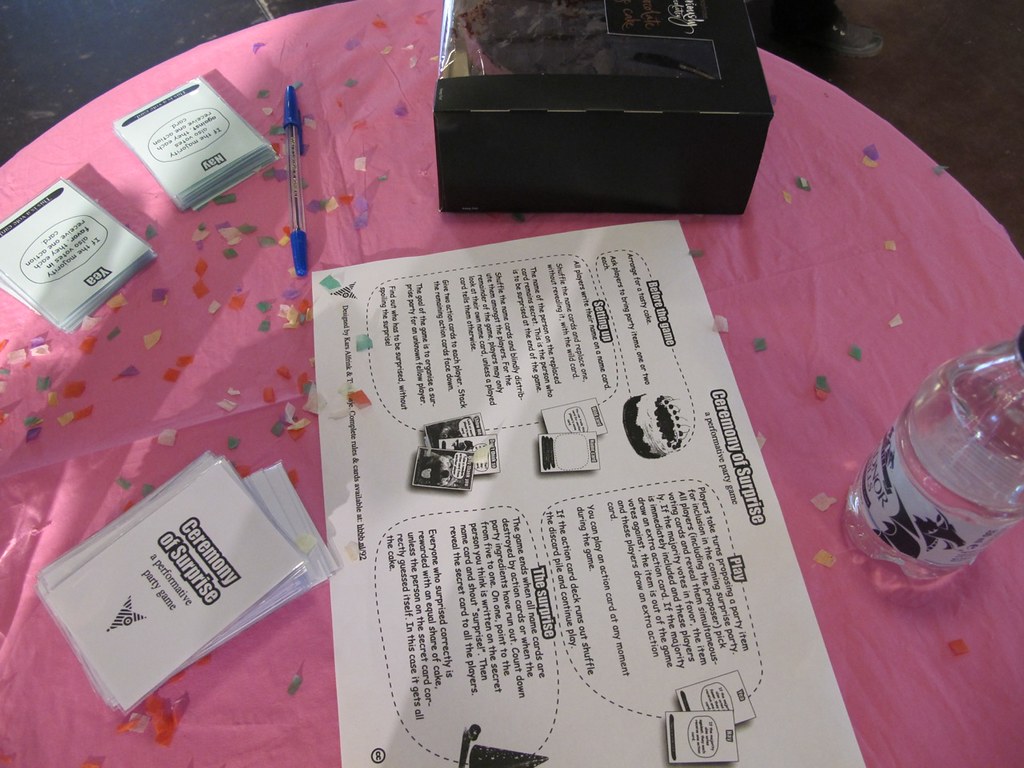
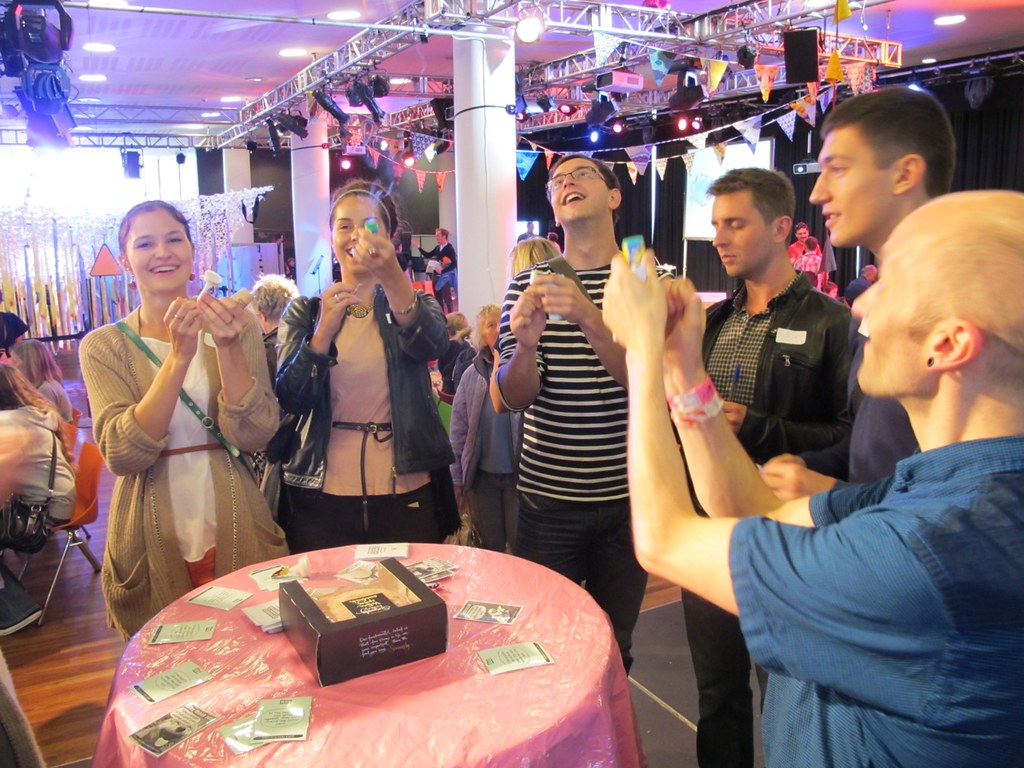
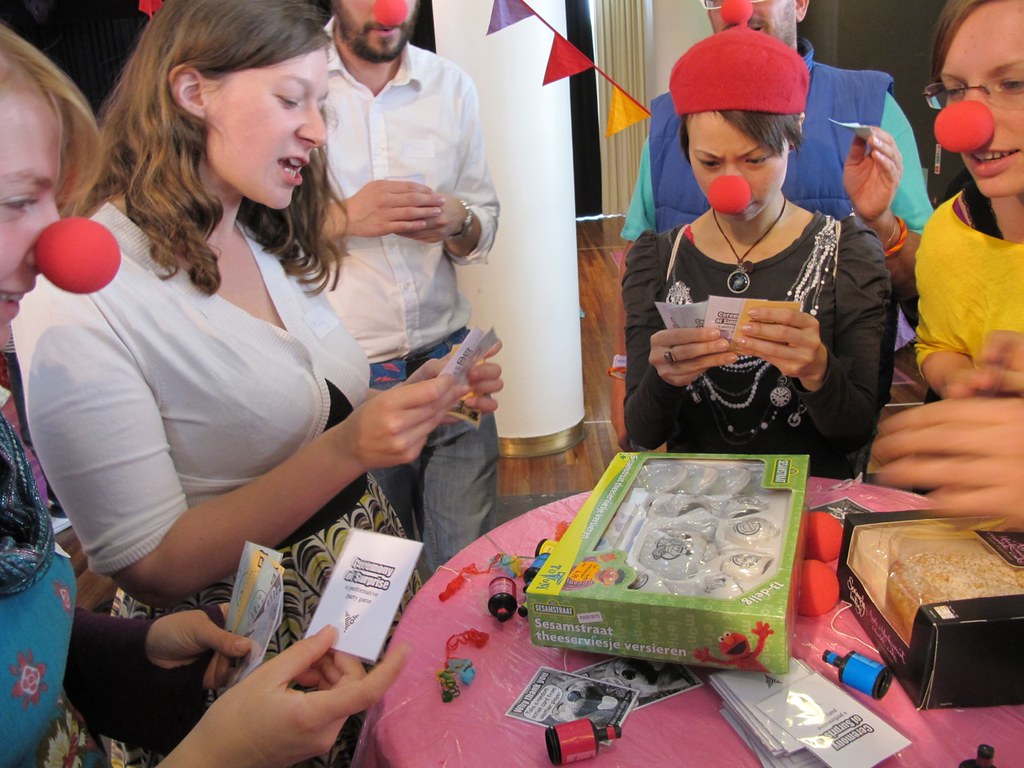
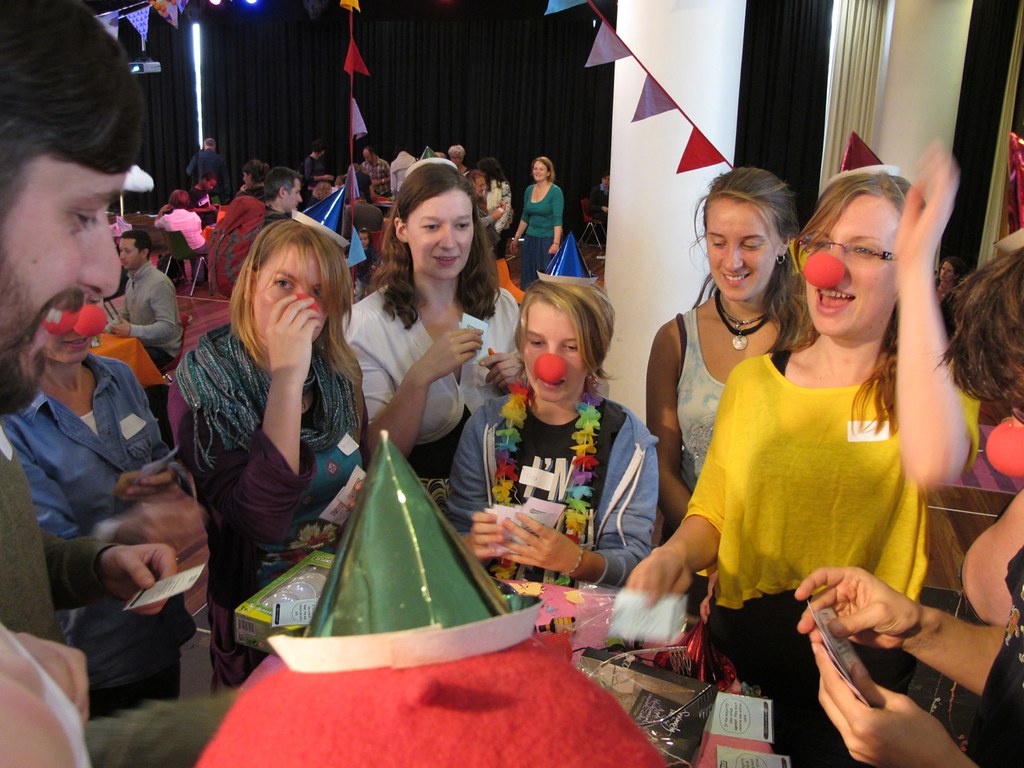
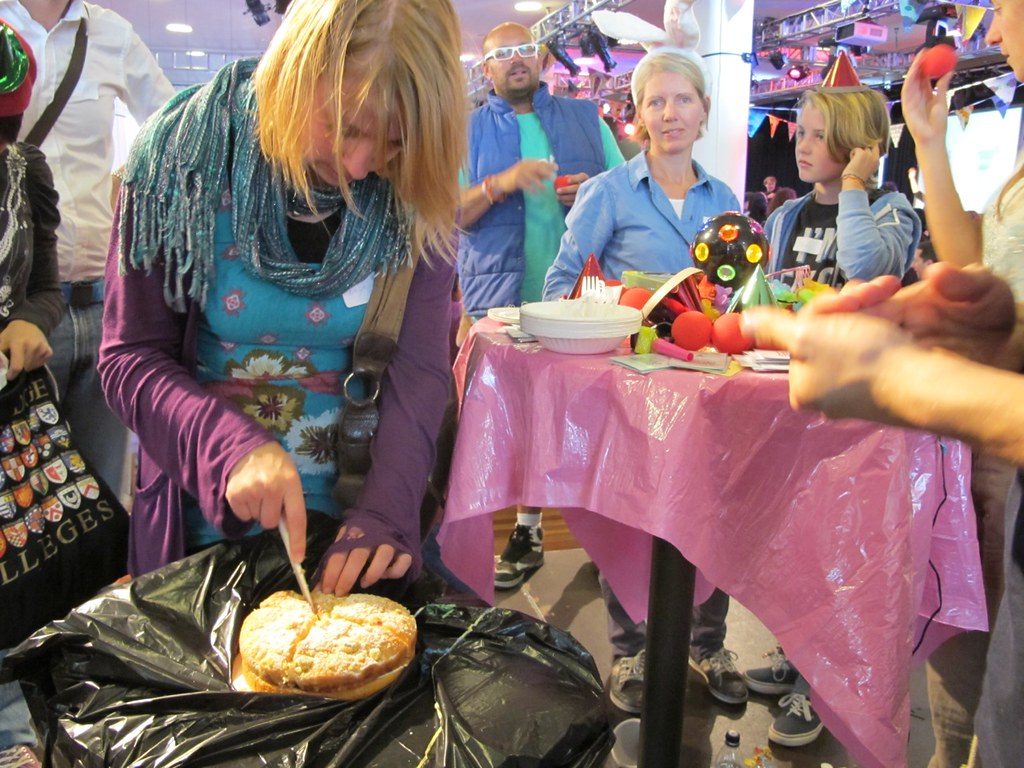
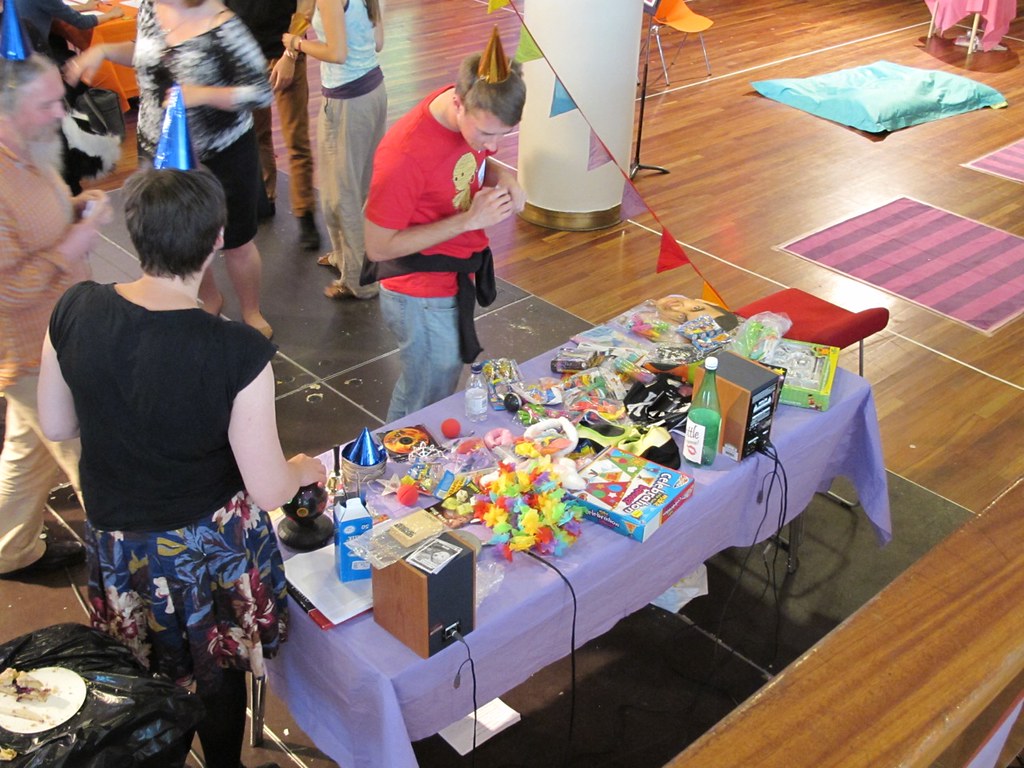
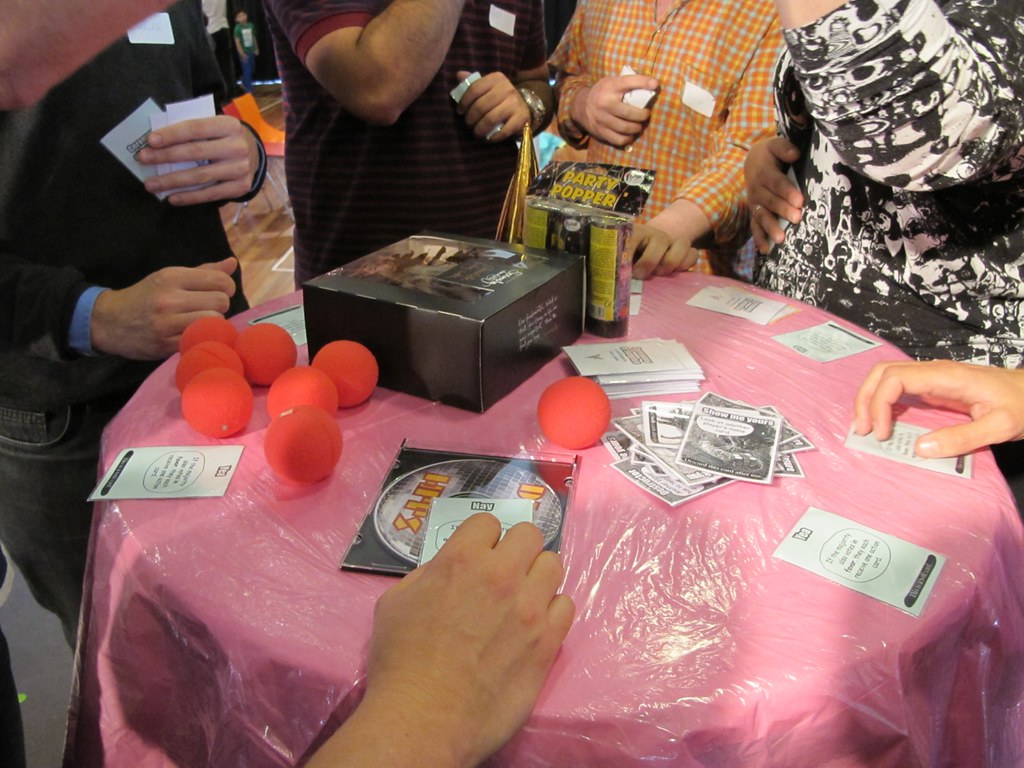
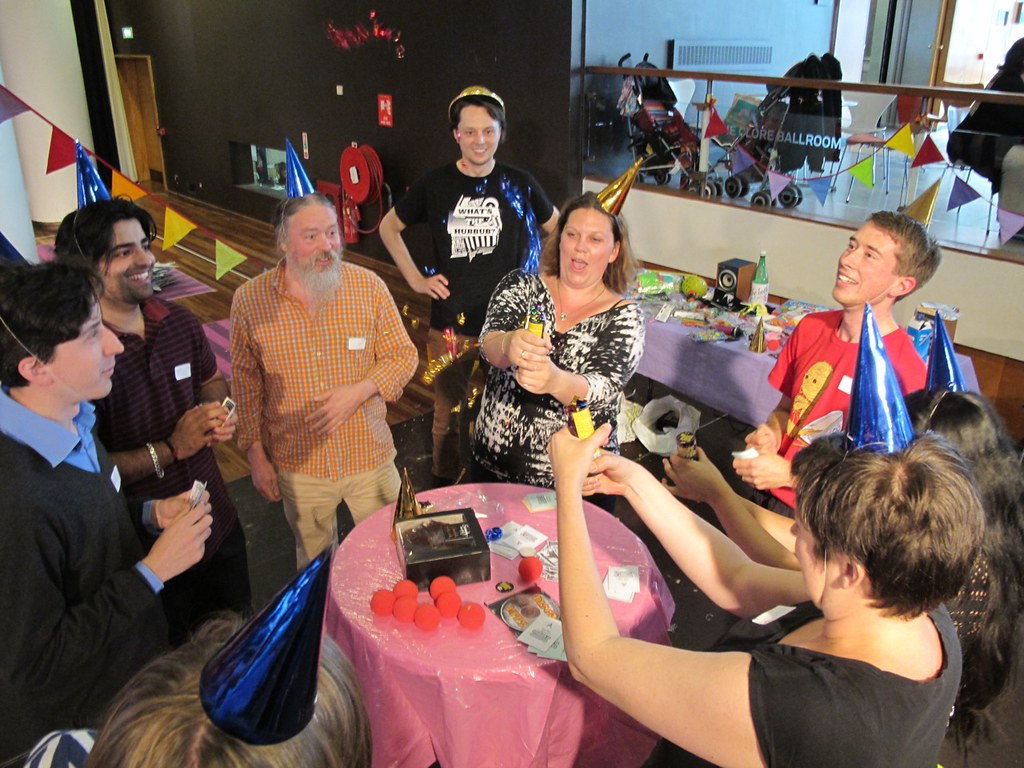
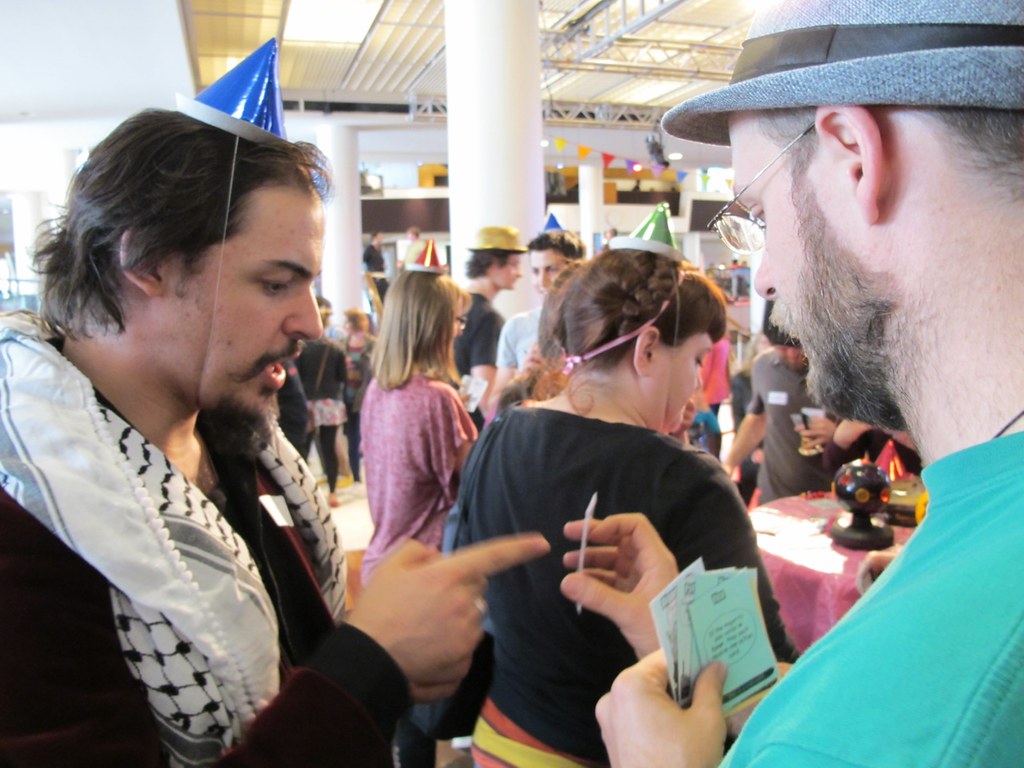
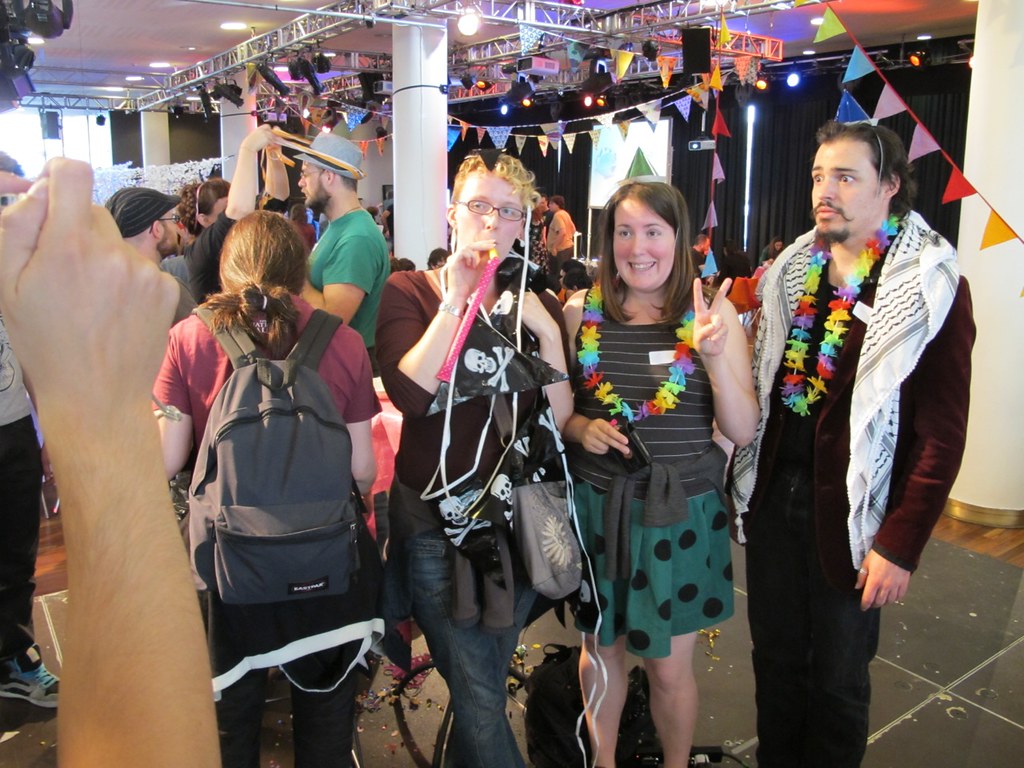
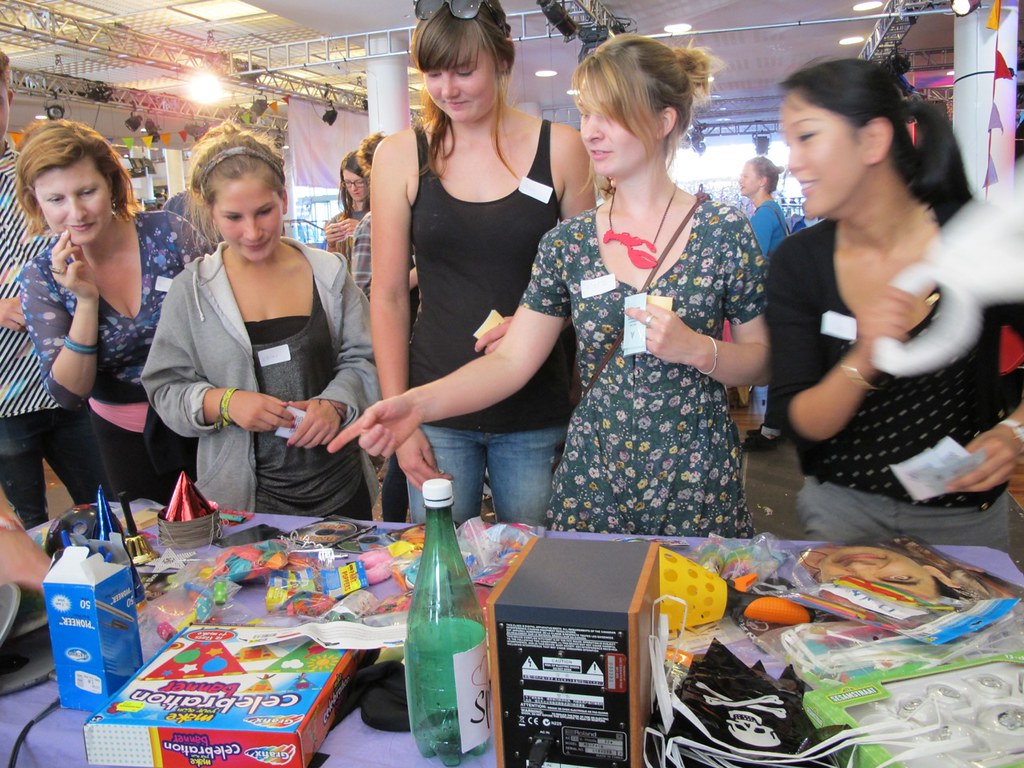
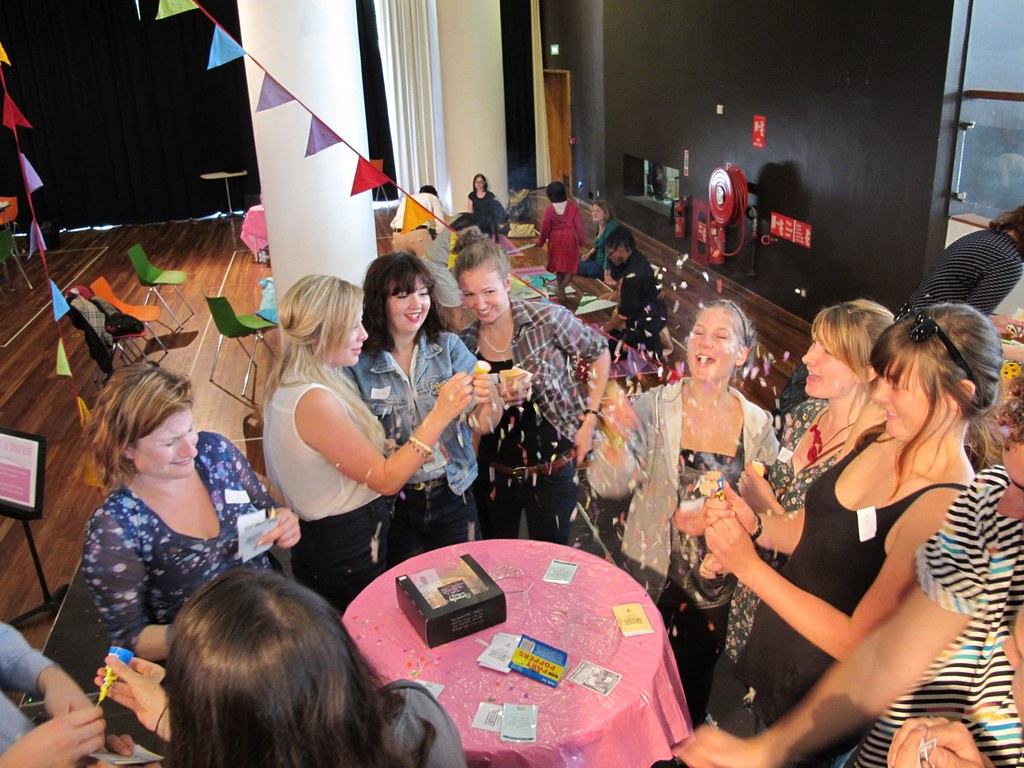
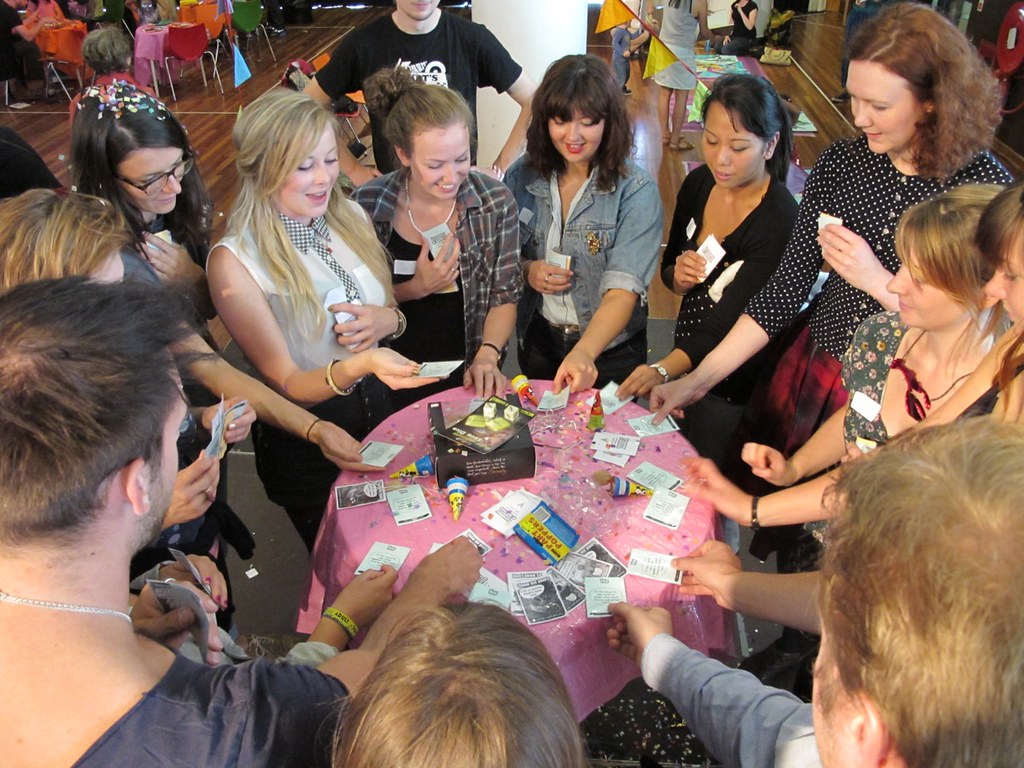
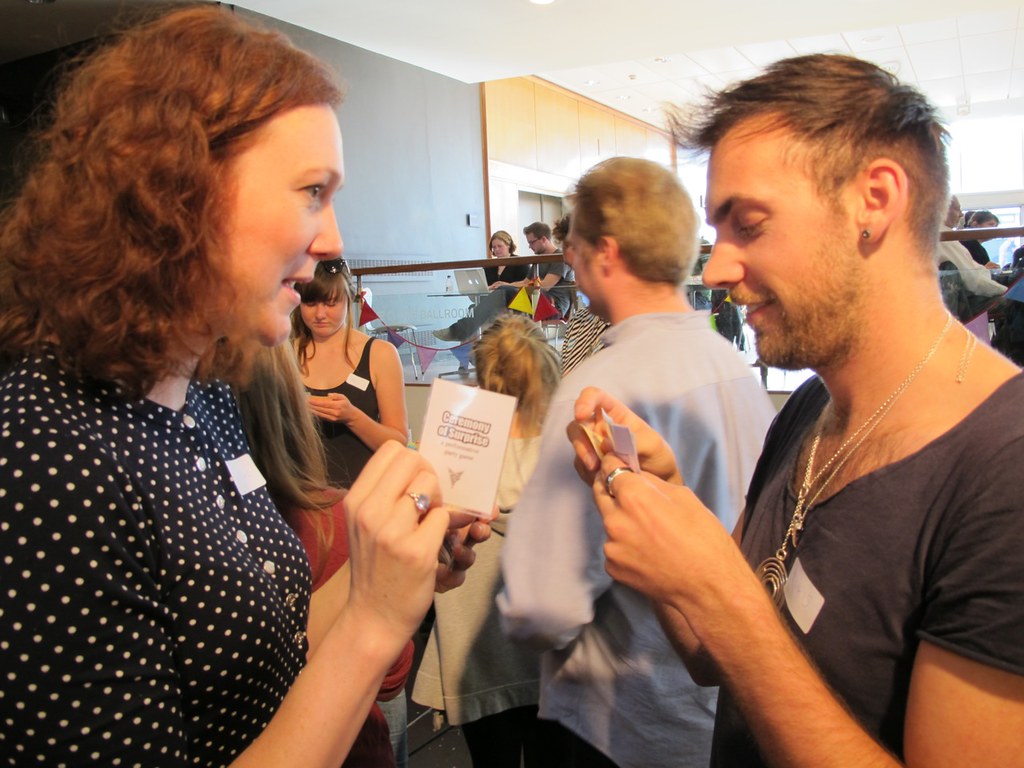
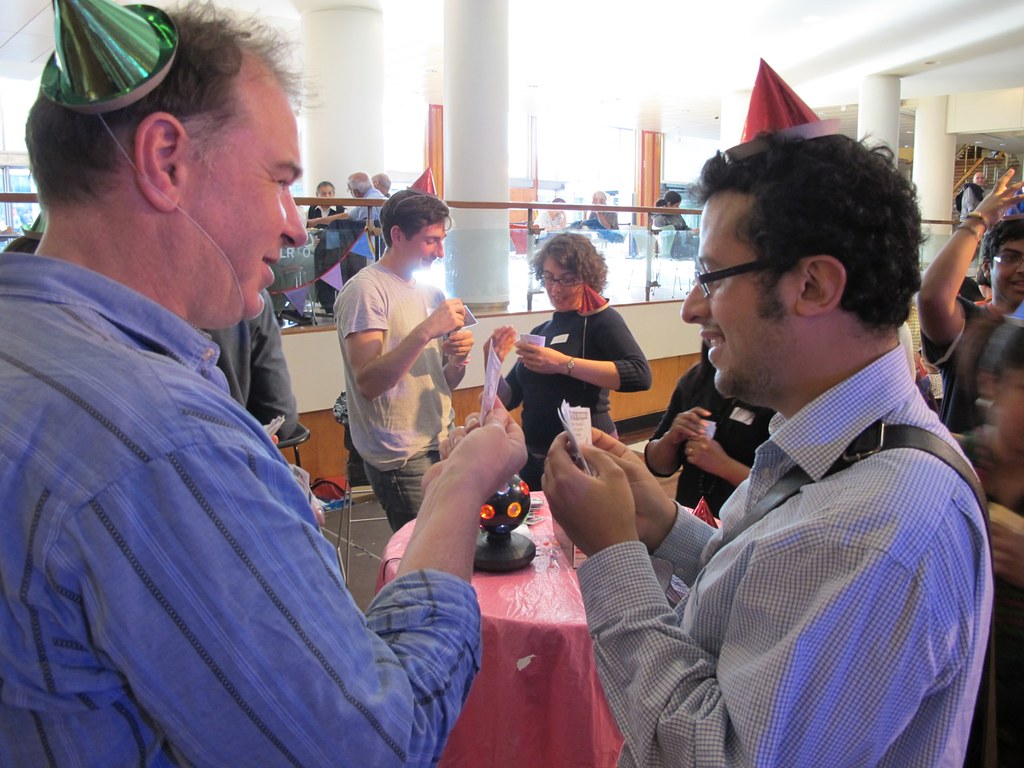
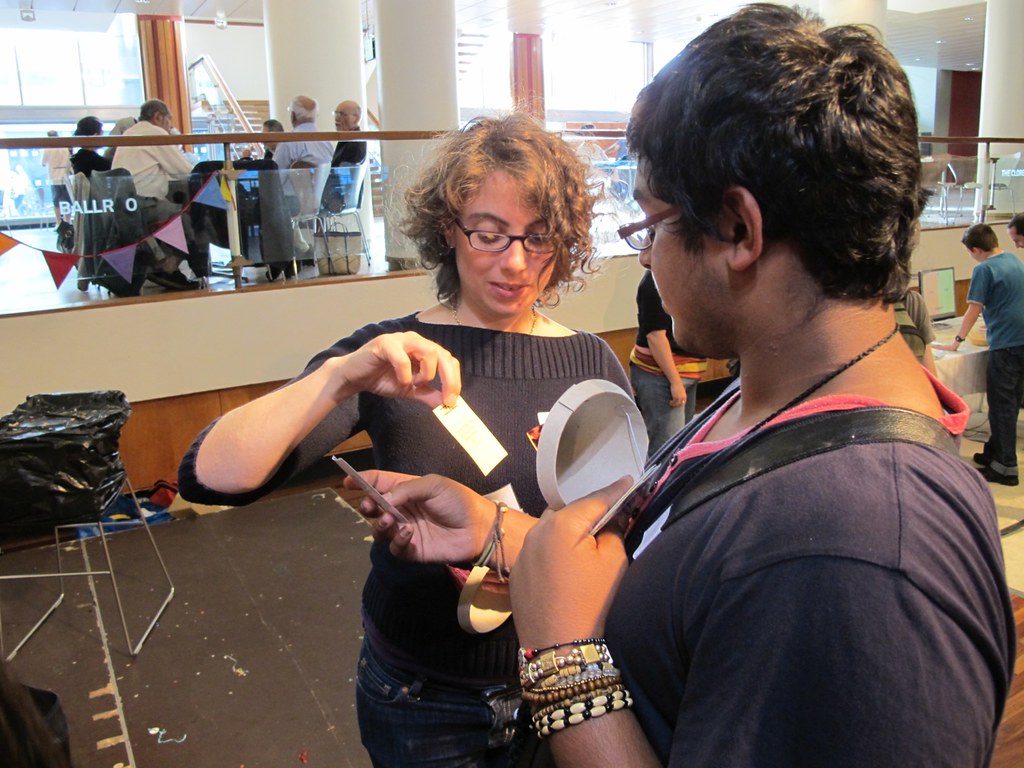
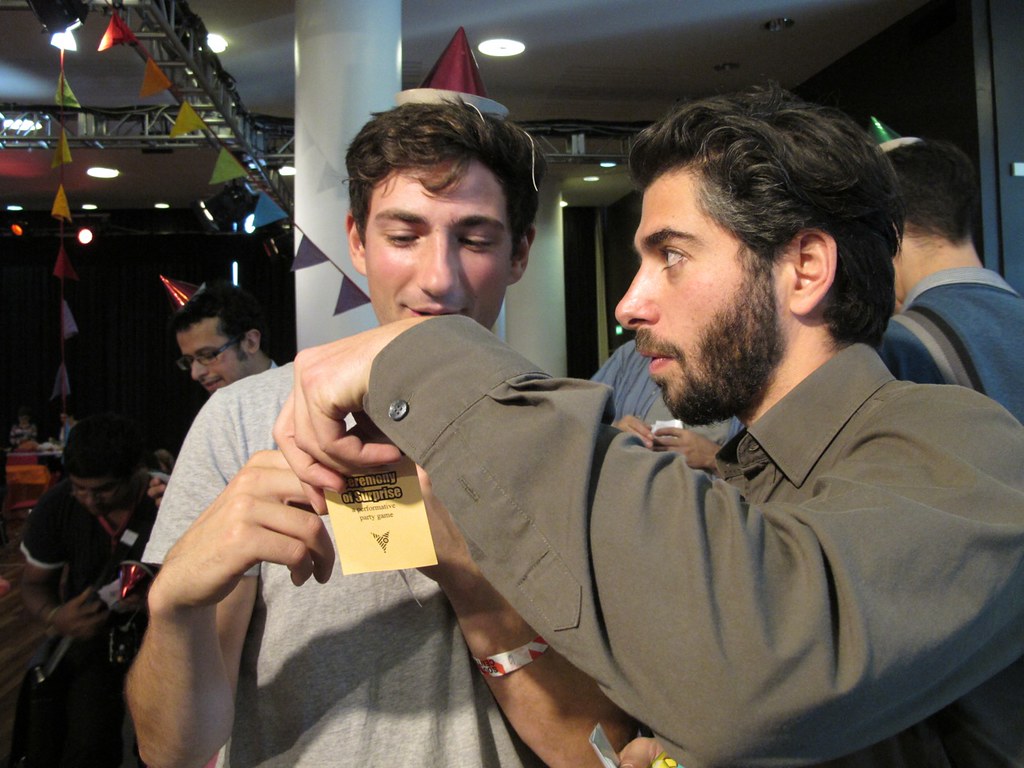
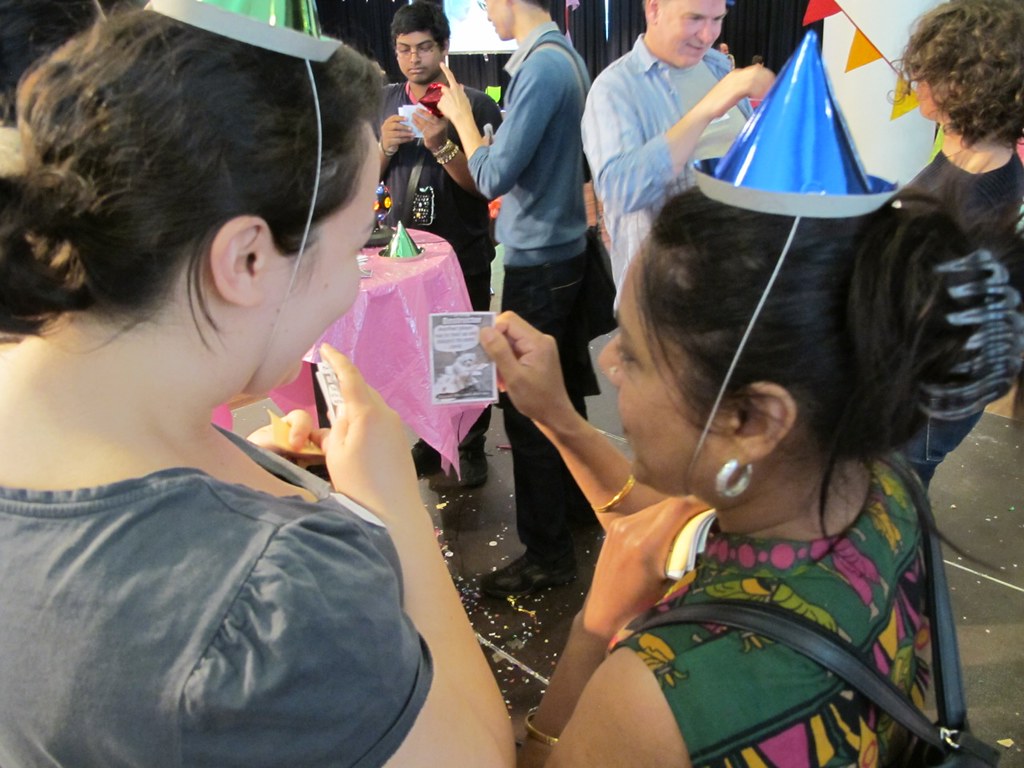
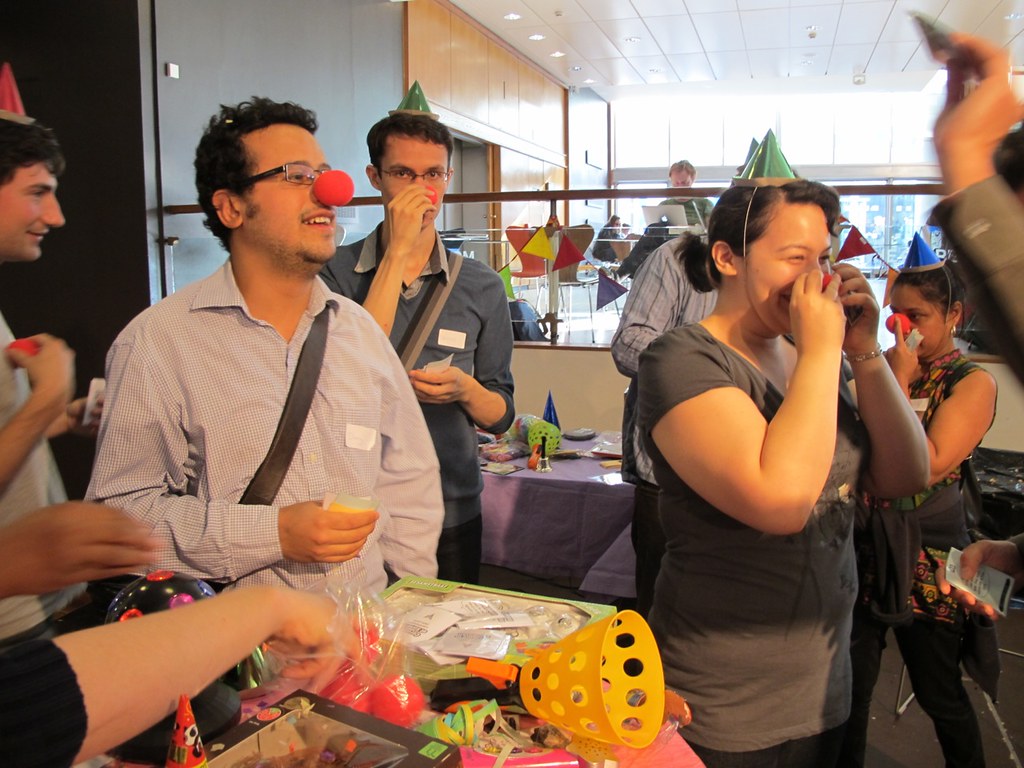
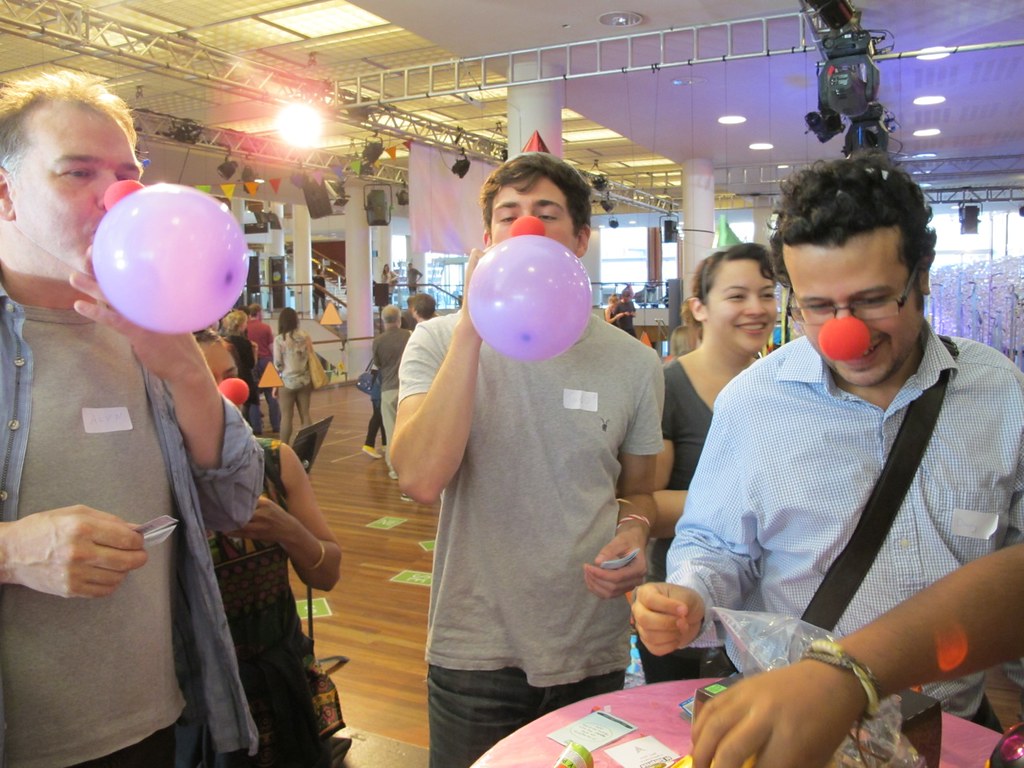
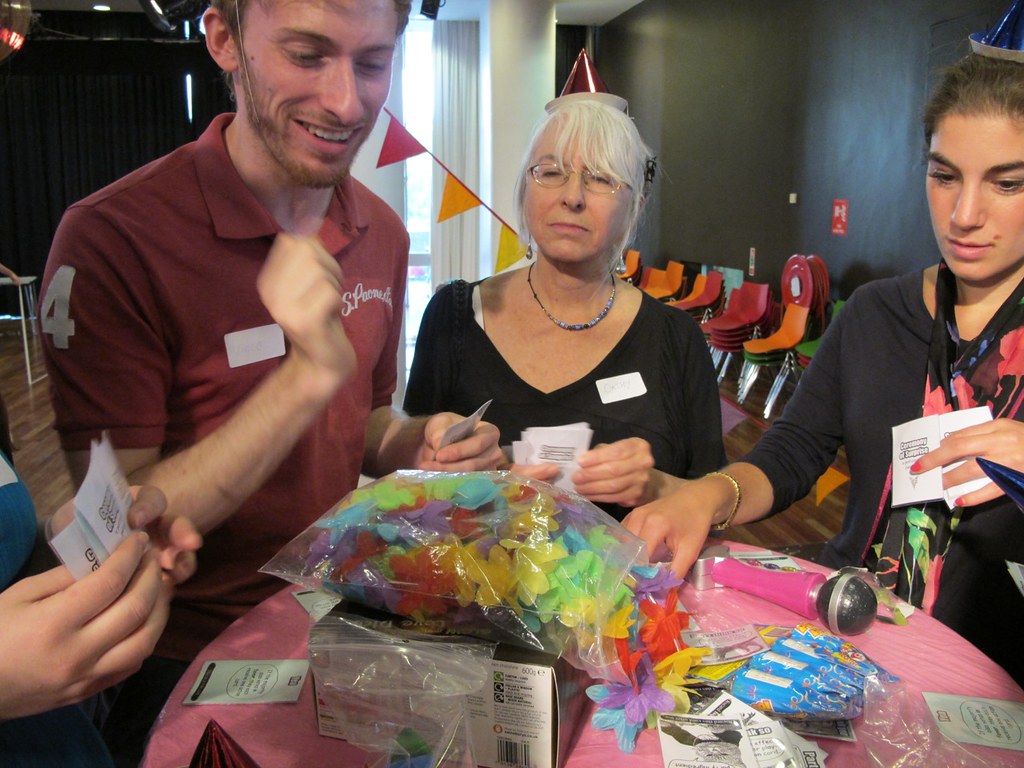
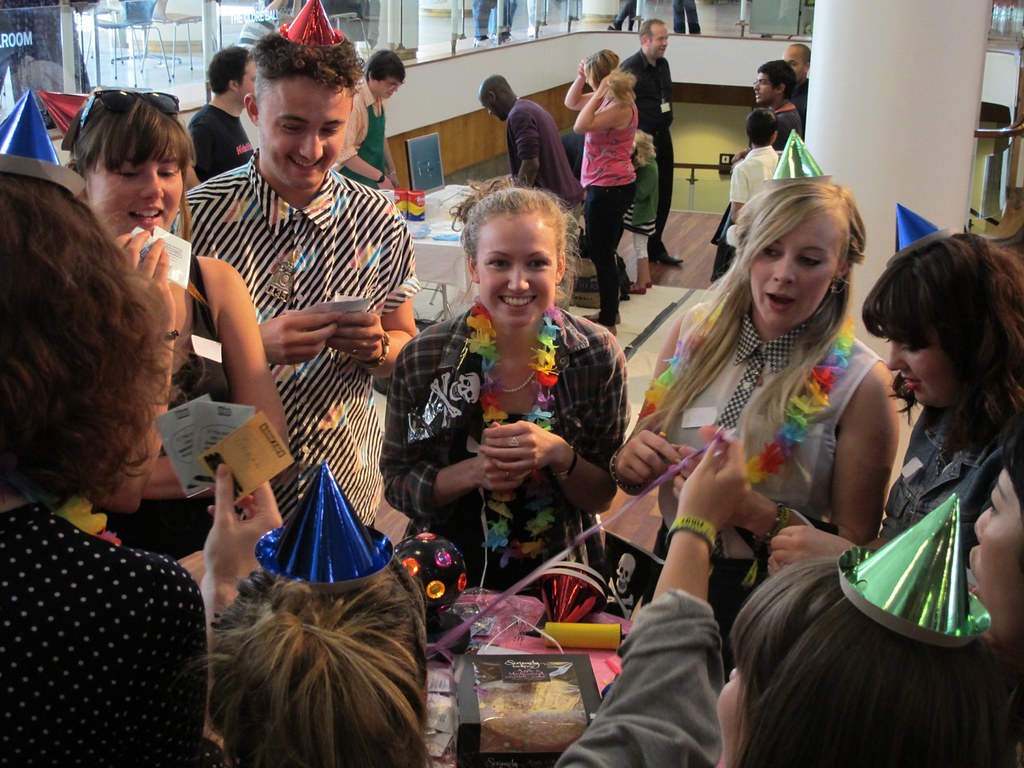
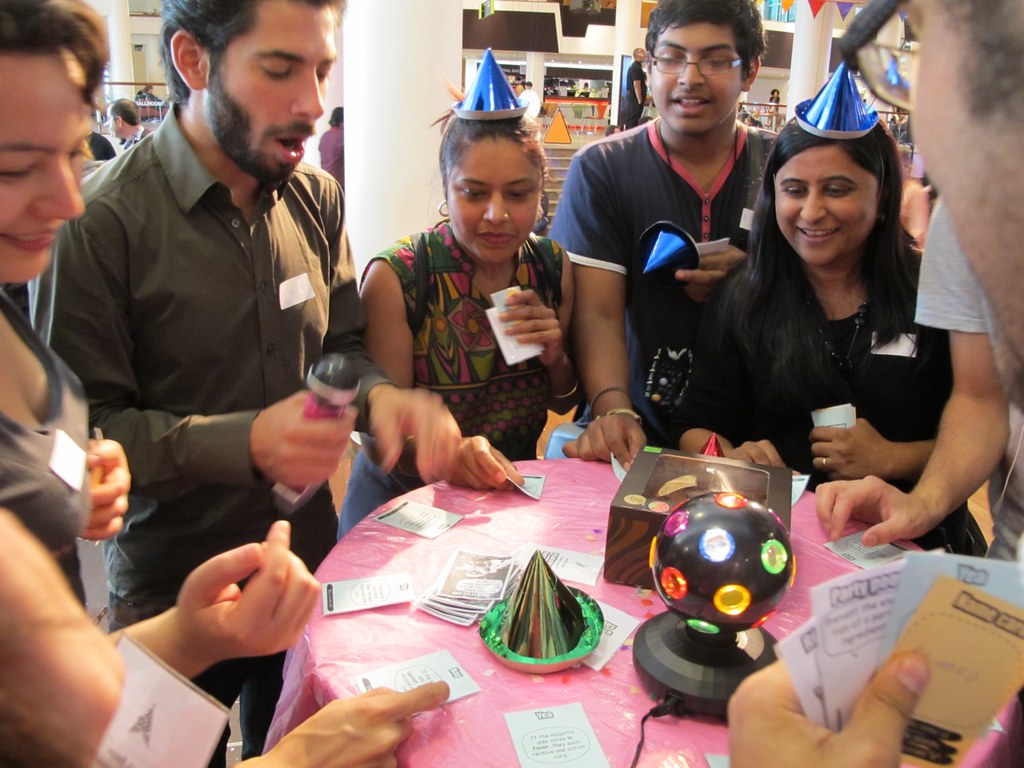
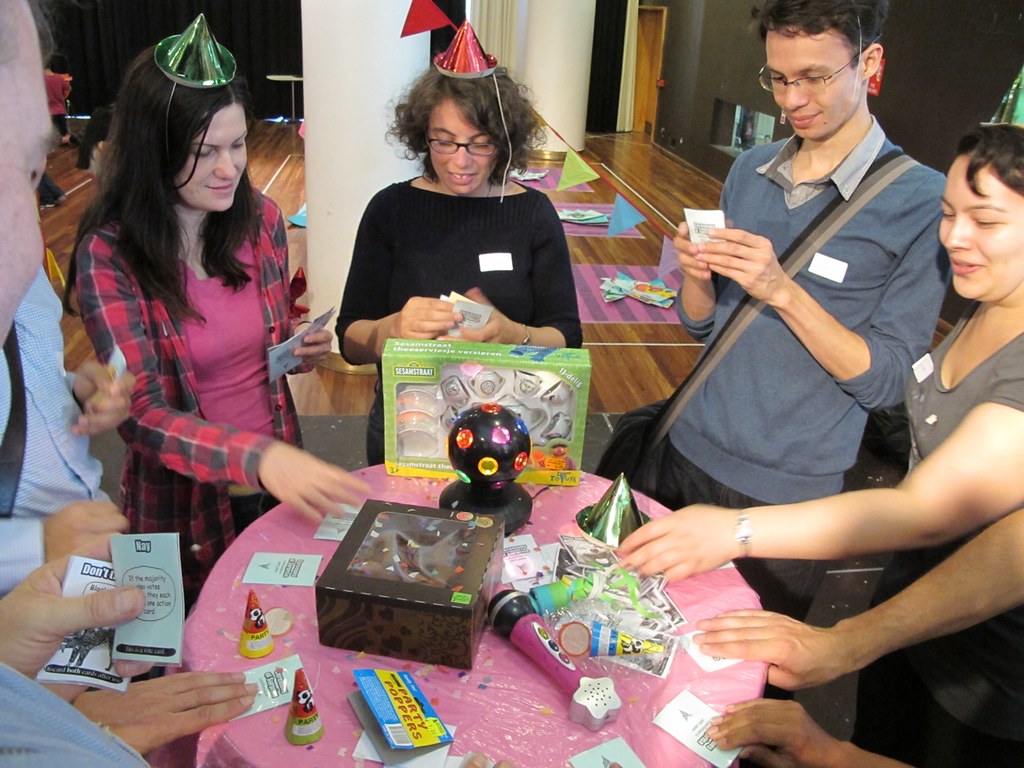
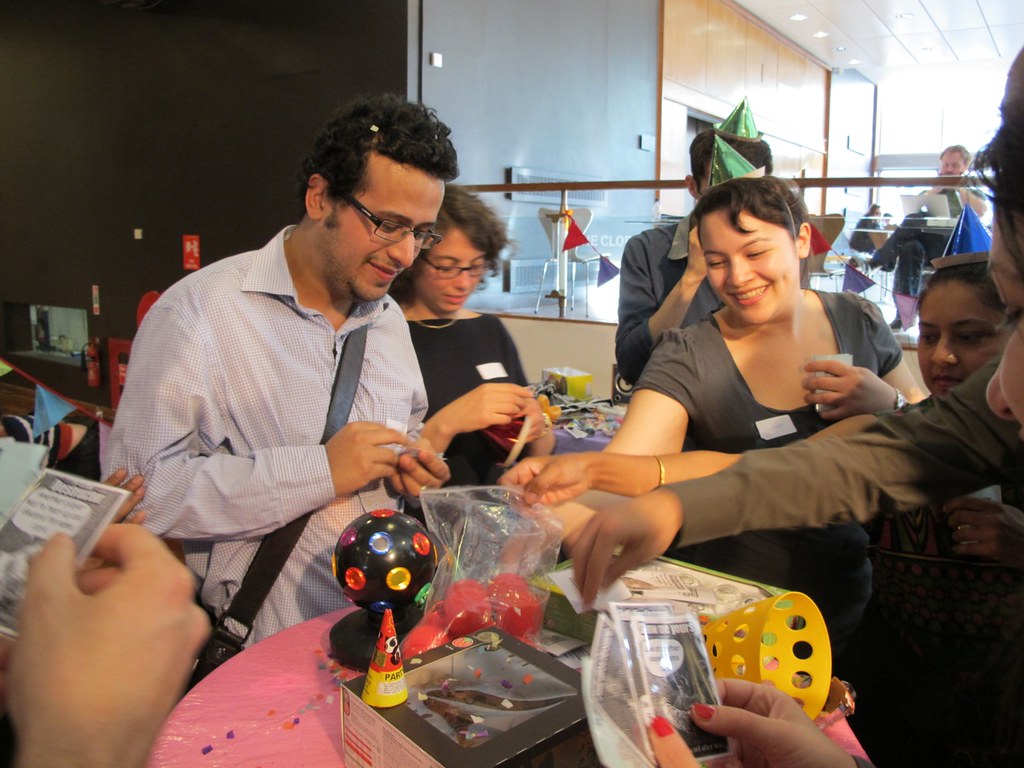
On Sun­day, we ran Cer­e­mo­ny of Sur­prise from 1–6pm at the Week­ender and had a blast. We end­ed up run­ning eight games, each last­ing around 45 min­utes. Groups ranged from eight to fif­teen play­ers. I par­tic­u­lar­ly enjoyed how the game con­sis­tent­ly built up towards an actu­al par­ty atmos­phere. Peo­ple singing to each, shar­ing cake and so on, seem­ing­ly for­get­ting they were on a podi­um in a huge fes­ti­val hall.1

At the end of Sun­day Tim hopped on a plane home and I returned to the hotel, tired but sat­is­fied.

And on Mon­day I had the plea­sure of attend­ing Play­ing in Pub­lic, the con­fer­ence that round­ed out the week­end. I was real­ly impressed with the thought­ful treat­ment of the top­ic by every­one involved, bal­anc­ing ide­al­ism with prag­ma­tism with not a hint of cyn­i­cism to be found.

I par­tic­u­lar­ly enjoyed Pat Kane’s analy­sis of the olympics as mas­sive pub­lic event with a play­ful under­cur­rent, and Clare Red­ding­ton’s thoughts on design­ing pub­lic play that were firm­ly ground­ed in the Per­va­sive Media Stu­dio’s prac­tice. Oth­er high­lights includ­ed the heart­warm­ing pan­el on regen­er­a­tion games, Ben­nett Fod­dy’s slight­ly sadis­tic med­i­ta­tion on suf­fer­ing in the olympics and Jason Antho­ny’s ideas about slow tech­nol­o­gy.

My own con­tri­bu­tion con­sist­ed of around 20 min­utes of ram­bling about the weird, leg­i­bil­i­ty and the use­ful vs. use­less games dichoto­my. It got a nice write­up at Wired UK if you’re curi­ous. I’ll post slides and notes soon(ish).

If you can’t tell this was a smash­ing week­end and I am super hap­py to have been part of it. Thanks to Alex, Hol­ly, Sarah, Bron­wyn, Tom and the rest of the Hide&Seek crew for hav­ing me.

Now to squeeze as much as I can from what remains of this week.

  1. The rules and card PDFs have been updat­ed, by the way. So I invite you to make your own set, invite some friends and give the game a go. If you do, let us know how it went. [↩]
Posted in Weeknotes | Tagged , , , , , , , , , | Comments closed